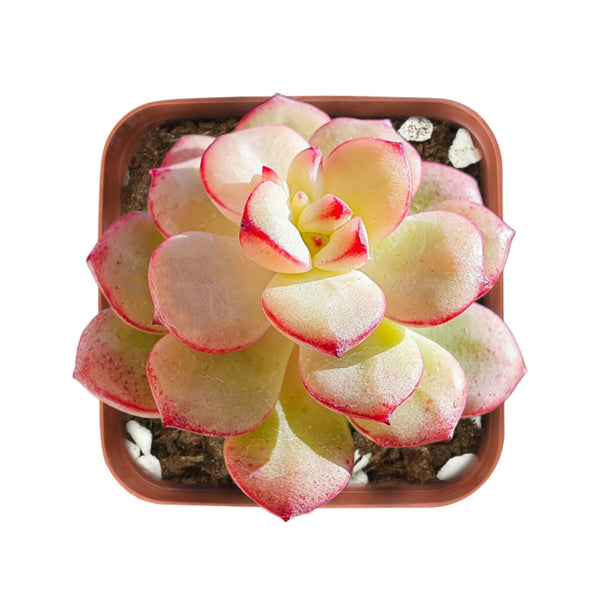
Few succulents capture the hearts of plant enthusiasts quite like Cotyledon tomentosa 'Variegata', affectionately known to many as the Variegated Bear’s Paw. With its plush, velvety leaves, prominent apical teeth that blush a vibrant pink under stress, and a surprisingly robust growth rate during its active seasons, it is a unique beauty in any collection.
However, cultivating this striking variegated succulent comes with a notorious caveat: sudden and catastrophic defoliation.
It is a heartbreaking yet incredibly common scenario. One day your variegated Bear’s Paw is dense and thriving; the next, a gentle nudge or a shift in the weather leaves you with a pot of naked stems. Because variegation inherently reduces a plant's chlorophyll levels, Cotyledon tomentosa 'Variegata' possesses a much lower tolerance for environmental stress than its solid-green counterpart.
Understanding the physiological triggers behind this defense mechanism is the key to preventing it. In this comprehensive guide, we will dissect the reasons why white-variegated Bear’s Paw is dropping leaves, analyze the specific scenarios that trigger defoliation, and provide practical solutions.

Below are the five primary environmental stressors that trigger this abscission zone to activate in variegated Bear's Paws.
1. Over-Exposure to Sunlight (Summer and Early Autumn)
While many succulents crave unobstructed sunlight, the variegated Bear’s Paw is highly susceptible to solar radiation damage and thermal shock. During the peak of summer and the transitional weeks of early autumn, intense, direct UV rays can quickly overheat the plant’s tissues.
Because the white or cream-colored margins of Cotyledon tomentosa 'Variegata' lack chlorophyll, they cannot effectively process high intensities of light. Instead, the heat accumulates in the thick, water-storing leaves, causing localized cellular collapse. To protect its primary meristems (growth points) and main stems from drying out completely, the plant will jettison its overheated leaves. In severe cases, this thermal stress leads to stem desiccation, causing the branches to wither, turn brittle, and die back entirely.

The Solution: Providing strategic shading is mandatory. During high-temperature seasons, you must provide filtered light or utilize a 30% to 50% agricultural shade cloth to diffuse harsh afternoon rays. Ensuring the plant only receives soft, morning sunlight (before 11:00 AM) will prevent thermal abscission while maintaining the plant’s signature pink tips.
2. Waterlogged Soil and Root Suffocation
The root system of Cotyledon tomentosa 'Variegata' is exceptionally delicate and demands a high gas-exchange rate within the soil. When the potting medium remains saturated for extended periods, water displaces the oxygen pockets in the soil, creating an anaerobic (oxygen-depleted) environment.
When roots are starved of oxygen, they cannot respirate or absorb nutrients efficiently. This root asphyxiation sends an emergency chemical signal to the foliage, triggering rapid leaf drop or stem rot. Concurrently, the excess moisture causes cell walls in the leaves to rupture due to over-hydration (a condition akin to edema), leading to mushy, translucent, or rotting leaves, alongside unsightly etiolation (weak, elongated stretching of the stems).

The Solution: Shift to a highly porous, gritty substrate optimized for drainage. A professional-grade mix for a variegated Bear's Paw should consist of 60% to 70% inorganic gritty material (such as pumice, perlite, lava rock, or calcined clay) and only 30% to 40% organic matter (peat moss or coco coir). Never let the pot sit in standing water, especially in summer; allow the potting soil to dry out completely down to the bottom of the pot before watering again.
3. Poor Airflow and Seasonal Dormancy Shifts
Air movement is a vital, yet frequently overlooked, variable in succulent viticulture. Cotyledon tomentosa variegata is a winter-grower that shifts into a semi-dormant or fully dormant state during the peak heat of summer. When the ambient temperature rises, the plant's metabolic rate slows down drastically to conserve resources.
In an environment with poor airflow, especially during a hot summer dormancy shift, the plant cannot effectively transpire (evaporate water through its stomata). This creates localized humidity zones around the fuzzy foliage, choking the plant. Conversely, during the winter active growth period, indoor growers often close windows, leading to inadequate ventilation. If the air becomes completely stagnant during these critical seasonal phases, the plant will shed its leaves as a desperate form of self-preservation.

The Solution: Cultivate an environment with constant, gentle air circulation. If growing indoors or in a greenhouse, position a small electric fan near your succulent collection to keep the air moving without blowing directly on the plant at high speeds. This disrupts the boundary layer of humid air around the leaves and accelerates the drying time of the soil.
4. Leaf-Surface Moisture and Trichome Water Retention
The defining feature of Cotyledon tomentosa is its dense covering of velvety hairs, botanically known as trichomes. In their native South African habitats, these trichomes serve to harvest morning fog and shade the leaf surface from intense light. However, in a cultivated garden setting, they pose a significant risk if water is applied incorrectly.
If you water your Bear’s Paw overhead or leave it exposed to heavy rainfall, water droplets become trapped within the dense web of trichomes. Because of the surface tension held by these hairs, the moisture does not evaporate quickly. When morning sunlight hits these wet leaves, the trapped droplets act like tiny magnifying glasses, causing localized scorch marks. Furthermore, persistent wetness at the base of the trichomes creates a humid micro-environment ripe for fungal pathogens, resulting in rapid leaf rot and immediate shedding.

The Solution: Enforce a strict sub-surface or bottom-watering protocol. Utilize a narrow-spouted watering can to apply water directly to the soil surface, completely bypassing the foliage. Alternatively, place the pot in a shallow tray of water for 15 minutes, allowing the root ball to absorb moisture via capillary action from the bottom up.
5. Physical Disturbance and Acclimation Shock
To put it plainly, the variegated Bear's Paw is physically brittle. The attachment point between the leaf petiole (the leaf stem) and the main branch is incredibly narrow and structurally delicate.

During routine maintenance—such as clearing away dry base leaves, top-dressing the soil, or simply moving the pot to a different shelf—the slightest physical disturbance can cleanly snap this connection. Furthermore, Cotyledon tomentosa 'Variegata' is highly sensitive to acclimation shock. Moving the plant from an indoor grow-light setup to an outdoor patio, or even changing its orientation relative to a window, forces the plant to rapidly adjust its internal moisture balance, which frequently manifests as a sudden drop of perfectly healthy-looking leaves.
The Solution: Handle the plant with extreme care and practice situational stability. Place your variegata Bear's Paw in a permanent, optimized location and avoid moving it unnecessarily. When grooming the plant to remove naturally dead leaves, use a pair of long, fine-tipped horticultural tweezers to gently pull the old tissue away without bumping the healthy paws above.

Emergency Triage: How to Save a Completely "Naked" Variegata Bear’s Paw
If the worst has happened and you are staring at a completely defoliated, bare stem, do not panic, and do not throw away the plant. A bare stem doesn't mean a dead plant, provided the core vascular system remains intact.
Follow this step-by-step emergency protocol to stimulate latent growth points and regenerate your variegated Bear's Paw:
Step 1: Check Stem Viability
Before initiating recovery, gently press the main stem and branches with your fingers.
If the stem feels firm and solid, the plant’s internal transport system is alive. The plant has a high probability of making a full recovery.

If the stem feels hollow, soft, or squishy: The tissue is rotting. Use a sterilized blade to cut back the stem until you reach clean, healthy tissue that shows no signs of discoloration.
Step 2: Relocate to a Protected Micro-Climate
Immediately move the naked plant away from direct sunlight, intense heat, or drafty areas. Place it in a brightly lit, shaded location with excellent, continuous airflow. A covered patio or a bright, east-facing window with a gentle fan nearby provides the perfect environment for recovery.
Step 3: Stop All Watering
CRITICAL WARNING: Without leaves, the plant cannot transpire (evaporate water). This means it has no way to draw moisture out of the soil.
Do NOT water the soil, and under no circumstances should you pull the plant out of its pot to "air out the roots." Uprooting a bare plant destroys the microscopic root hairs, eliminating its remaining stability and sending it into terminal shock. Instead, leave it completely alone in its pot and allow the soil to go bone-dry.

Step 4: Wait for New Growth Buds to Appear
With the plant resting in a stable, well-ventilated, shaded environment, keep a close eye on the old leaf scars along the naked stem. As seasonal temperatures moderate and become cool (ideally between 15°C to 22°C / 59°F to 71°F), the plant’s natural hormones will trigger a growth response.
Tiny, velvety pink-and-white buds will soon begin to push through the stem. Once these new rosettes develop their first true set of "paws," you can resume a highly controlled, conservative watering routine, allowing your resilient Bear's Paw to successfully rebuild its canopy.
Conclusion
Successfully cultivating Cotyledon tomentosa 'Variegata' requires a shift from standard houseplant care to precise environmental management. While a sudden bout of defoliation can be alarming, it is simply the Bear’s Paw’s natural response to environmental stress. By optimizing your soil mix for rapid drainage, providing excellent airflow, shielding the foliage from direct summer sun, and keeping water off the velvety leaves, you can easily prevent the conditions that trigger leaf drop.

If your plant does drop its leaves, remember that patience and stability are your best tools. Keep the stem intact, halt irrigation, and let the plant's natural resilience do the work. With the right cultural adjustments, your variegated Bear’s Paw will quickly regenerate its iconic, plush canopy and thrive for seasons to come.