If you’re a succulent enthusiast looking to add a unique and low-maintenance plant to your collection, the Tephrocactus articulatus var. inermis, commonly known as the Pine Cone Cactus, is an excellent choice. With its striking segmented stems resembling miniature pine cones and its adaptability to various growing conditions, this cactus has gained popularity among both novice and experienced gardeners. However, like all succulents, it requires specific care to thrive. In this in-depth guide, we’ll explore everything you need to know about caring for Tephrocactus articulatus var. inermis, from its origins and physical characteristics to detailed maintainment tips for light, water, soil, and more. Whether you’re growing it indoors on a windowsill or outdoors in a arid garden, this guide will help you keep your Pine Cone Cactus healthy and vibrant for years to come.

Understanding Tephrocactus articulatus var. inermis: Origins and Characteristics
Before diving into care techniques, it’s essential to understand the natural habitat and unique features of the Pine Cone Cactus, as this knowledge forms the foundation of effective maintenance.
Botanical Background
Tephrocactus articulatus var. inermis belongs to the Cactaceae family, a diverse group of succulent plants adapted to arid environments. The genus Tephrocactus, derived from the Greek words “tephros” (ash-colored) and “cactus,” refers to the often grayish hue of its stems. The species name “articulatus” means “jointed,” describing its segmented growth pattern, while “var. inermis” indicates this variety is spineless (“inermis” meaning unarmed in Latin)—a key distinguishing feature from other Tephrocactus articulatus varieties, which may have small spines.
Natural Habitat
This cactus is native to the semi-arid regions of Argentina and Bolivia, where it thrives in rocky, well-draining soils on hillsides and plains. In its natural environment, it endures intense sunlight, fluctuating temperatures, and periods of drought interspersed with occasional rainfall. These conditions have shaped its ability to store water in its stems and tolerate dry, harsh climates—traits that directly influence how we should care for it in cultivation.

Physical Features
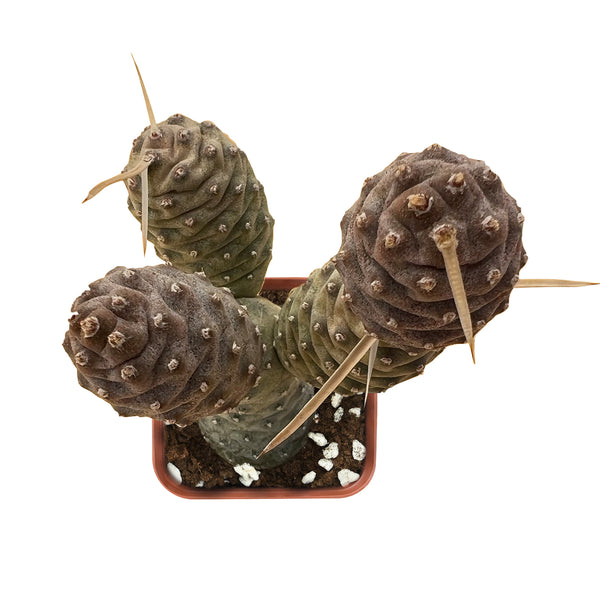
The Pine Cone Cactus is instantly recognizable by its unique stem structure. Its stems grow in small, rounded segments that stack atop one another, creating a clustered, pine cone-like appearance. Each segment typically measures 2–5 cm (0.8–2 inches) in diameter, with a smooth, green to grayish-green surface. Unlike many cacti, this variety lacks prominent spines, though it may have tiny, hair-like structures called glochids at the areoles (small, cushion-like structures where spines or flowers emerge). In spring or early summer, mature plants may produce small, pale yellow or white flowers that bloom at the tips of the stems, adding an extra touch of beauty to this already charming succulent.
How to Care for Tephrocactus articulatus var. inermis / Pine Cone Cactus
Light Requirements: Mimicking Natural Sun Exposure
In its native habitat, this cactus receives full sun for most of the day, and replicating this light exposure is key to keeping it happy. For optimal growth, the Pine Cone Cactus requires 6–8 hours of direct sunlight daily. When grown indoors, place it near a south-facing window, as this orientation typically receives the most intense sunlight throughout the day. East or west-facing windows can also work, but they may provide slightly less light, so monitor your plant for signs of insufficient light (discussed below). Outdoors, choose a location that gets full sun, such as a sunny patio, balcony, or garden bed with no shade from trees or buildings.

Signs of Light Stress
It’s important to recognize when your cactus isn’t getting enough light or is getting too much, as both can cause problems:
Insufficient light: If your Pine Cone Cactus doesn’t receive enough sunlight, it may exhibit etiolation—a condition where the stems stretch outwards (becoming leggy) in search of more light. The segments may also become pale or lose their vibrant green color, and growth may slow down significantly.
Too much light: While this cactus loves sun, intense, unfiltered sunlight during the hottest part of the day (especially in summer) can cause sunburn. Sunburn appears as brown, yellow, or white spots on the stems, which won’t heal and may permanently damage the plant. This is more common in regions with extremely high temperatures or when the plant is suddenly moved from a shaded area to full sun.

Temperature and Humidity: Creating a Comfortable Climate
Tephrocactus articulatus var. inermis is adapted to the temperature fluctuations of its native semi-arid environment, but it has specific preferences when it comes to temperature ranges and humidity levels. Understanding these preferences will help you protect your cactus from extreme conditions.
Optimal Temperature Range
This cactus thrives in warm temperatures during the growing season (spring and summer). The ideal temperature range for active growth is between 20°C and 30°C (68°F and 86°F). It can tolerate slightly higher temperatures (up to 35°C / 95°F) as long as it has access to shade during the hottest hours and isn’t exposed to prolonged heatwaves without proper ventilation.

During the winter, the Pine Cone Cactus enters a period of dormancy, where its growth slows down. During this time, it prefers cooler temperatures, ideally between 5°C and 15°C (41°F and 59°F). This cooler dormancy period is beneficial for the plant, as it helps stimulate flowering in the following spring.
Cold Hardiness
While the Pine Cone Cactus can tolerate cool temperatures during dormancy, it is not frost-hardy. Extended exposure to temperatures below 0°C (32°F) can cause severe damage or even kill the plant, as the water stored in its stems will freeze and rupture cell walls. If you live in a region with cold winters (USDA hardiness zones below 9), it’s crucial to bring your outdoor cactus indoors before the first frost. For zones 9 and above, where temperatures rarely drop below freezing, you can leave it outdoors but may want to provide temporary protection (such as a frost cloth) during unexpected cold snaps.
Humidity Considerations
In its native habitat, the Pine Cone Cactus experiences low humidity levels, typically between 20% and 40%. This makes it well-suited for dry indoor environments, such as those heated in winter, where humidity often drops. High humidity, on the other hand, can be problematic, as it increases the risk of fungal diseases and root rot.
If you live in a humid climate (humidity consistently above 60%), take steps to reduce moisture around your cactus:
- Ensure excellent air circulation by placing a fan near indoor plants or choosing an outdoor location with good wind flow.
- Avoid overwatering, as excess moisture in the soil combined with high humidity creates a breeding ground for pathogens.
- Consider growing your cactus in a container rather than in the ground, as containers allow for better control over soil moisture and drainage.

Watering: Mastering the Balance Between Drought and Overhydration
Proper watering is perhaps the most challenging aspect of caring for Tephrocactus articulatus var. inermis, as succulents are highly susceptible to root rot from overwatering. Like all cacti, the Pine Cone Cactus has evolved to store water in its stems, allowing it to survive long periods of drought. Understanding its watering needs based on the season and growing conditions is essential for its health.
The “Soak and Dry” Method
The golden rule for watering cacti, including the Pine Cone Cactus, is the “soak and dry” method. This approach mimics the natural rainfall patterns of its native habitat, where periods of drought are followed by occasional heavy rains. Here’s how it works:
Check soil moisture: Before watering, insert your finger 2–3 cm (1 inch) into the soil. If the soil feels dry at this depth, it’s time to water. If it still feels moist, wait a few more days and check again.
Water thoroughly: When watering, pour water slowly and evenly over the soil until it begins to drain out of the bottom of the container. This ensures that the entire root ball gets hydrated.

Allow to dry completely: After watering, let the soil dry out completely before watering again. This typically takes 7–14 days during the growing season, but can be longer in cooler weather or if the plant is in a low-light location.
Signs of Overwatering and Underwatering
It’s important to recognize the signs of improper watering so you can adjust your routine:
Overwatering: Symptoms include soft, mushy stems that may turn yellow or brown, a foul odor from the soil, and wilting despite the soil being moist. If you suspect overwatering, stop watering immediately and remove the plant from its pot to check the roots. Healthy roots are white or light tan, while rotting roots are dark brown or black and feel slimy. If root rot is present, trim away the affected roots, repot the plant in fresh, dry soil, and reduce watering.

Underwatering: Signs of underwatering include shriveled, wrinkled stems that may feel firm but look deflated, and slow or stunted growth. If your cactus is underwatered, give it a thorough soak and adjust your watering schedule to ensure it’s getting enough moisture during the growing season.
Soil and Potting: Ensuring Proper Drainage for Healthy Roots
The right soil mix and potting setup are crucial for the Pine Cone Cactus, as its roots require excellent drainage to prevent rot. In its native habitat, it grows in rocky, sandy soils that allow water to drain away quickly, and replicating this environment in cultivation is essential.
Ideal Soil Composition
Tephrocactus articulatus var. inermis thrives in a well-draining, gritty soil mix that is low in organic matter. A good cactus soil mix should contain a combination of inorganic materials to promote drainage and a small amount of organic matter to provide nutrients.

Here’s a recommended soil recipe:
● 60% inorganic grit: This can include materials such as perlite, pumice, coarse sand, or crushed granite. These materials create air pockets in the soil, allowing excess water to drain away from the roots.
● 30% potting soil: Use a high-quality, sterile potting soil that is low in peat moss (peat retains moisture, which can be problematic for cacti). Look for a mix labeled for cacti and succulents, or use a general potting soil and amend it.
● 10% organic matter: Add a small amount of compost or worm castings to provide slow-release nutrients. Avoid adding too much, as excessive organic matter can retain moisture.
Alternatively, you can purchase a commercial cactus and succulent soil mix and amend it by adding extra perlite or pumice (up to 50% of the total volume) to improve drainage further.
Choosing the Right Pot
The type of pot you use is almost as important as the soil mix, as it affects drainage and root health. Here are some key considerations:
● Material: Terracotta or unglazed ceramic pots are ideal for cacti because they are porous, allowing excess moisture to evaporate through the sides of the pot. This helps prevent the soil from staying too wet. Plastic pots can also work, but they retain more moisture, so you’ll need to be more careful with watering and ensure the soil mix is extra gritty.
● Size: Choose a pot that is only slightly larger than the root ball of your cactus. A pot that is too large will hold excess soil, which can stay moist for too long and increase the risk of root rot. As a general rule, the pot should be 2–3 cm (1 inch) wider in diameter than the cactus’s base.

● Drainage holes: Always select a pot with multiple drainage holes in the bottom. This allows excess water to escape, which is critical for preventing waterlogging. If you fall in love with a pot without drainage holes, you can drill holes in the bottom or use it as a cachepot (a decorative pot that holds the functional pot with drainage holes inside).
Repotting Guidelines
Tephrocactus articulatus var. inermis grows relatively slowly, so it won’t need to be repotted frequently. Repotting is typically necessary every 2–3 years, or when the plant has outgrown its pot (roots are growing out of the drainage holes or the plant is unstable in the pot). Here’s how to repot your Pine Cone Cactus:
- Choose the right time: The best time to repot is in spring, just as the plant begins to emerge from dormancy and enter its growing season. This allows the roots to recover and establish themselves in the new soil quickly.
- Prepare the new pot and soil: Select a pot slightly larger than the current one and fill it with fresh cactus soil mix, leaving enough space at the top to accommodate the plant.
- Remove the plant from its old pot: Gently tap the sides of the pot to loosen the soil, then carefully lift the cactus out. If it’s stuck, use a clean trowel to loosen the edges. Be careful not to damage the stems or roots.
- Inspect and trim roots: Check the roots for signs of rot (dark, mushy roots). If you find any, trim them away with clean, sharp scissors or pruning shears. Allow the roots to dry for 1–2 days before repotting to prevent infection.
- Repot the cactus: Place the cactus in the center of the new pot and fill in around it with soil, gently pressing the soil down to secure the plant. Leave the top of the root ball slightly exposed—don’t bury the stems too deeply.
- Wait to water: After repotting, wait 3–5 days before watering to allow any damaged roots to heal. This reduces the risk of rot.

Fertilizing: Providing Nutrients for Healthy Growth
While Tephrocactus articulatus var. inermis is not a heavy feeder, providing it with the right nutrients during the growing season can promote healthy growth and flowering. However, it’s important to fertilize sparingly, as overfertilizing can damage the roots and cause excessive, weak growth.
When to Fertilize
Fertilize your Pine Cone Cactus only during the active growing season, which is spring and summer. During fall and winter, when the plant is dormant, it doesn’t need additional nutrients, and fertilizing during this time can harm the roots.
Choosing the Right Fertilizer
Cacti have specific nutrient requirements, and using a fertilizer formulated for cacti and succulents is best. Look for a fertilizer with a low nitrogen content and higher levels of phosphorus and potassium, as nitrogen can promote excessive leafy growth (which is not desirable for cacti) and may increase the risk of rot. A good N-P-K ratio (nitrogen-phosphorus-potassium) is 2-7-7 or 1-2-3, but any balanced cactus fertilizer will work.
You can choose between liquid fertilizers, granular fertilizers, or slow-release pellets:
● Liquid fertilizers: These are mixed with water and applied during regular watering. They are absorbed quickly by the roots and allow for precise control over nutrient levels. Dilute liquid fertilizers to half the recommended strength to avoid burning the roots.
● Granular fertilizers: These are sprinkled on the soil surface and worked into the top layer. They release nutrients slowly as they break down with watering. Use granular fertilizers sparingly, following the package instructions.
● Slow-release pellets: These are added to the soil at the time of repotting and release nutrients gradually over several months. They are a convenient option for busy gardeners, but be sure to use the correct amount based on the size of your pot.

Fertilizing Frequency
During the growing season, fertilize your Pine Cone Cactus once every 4–6 weeks. This frequency provides enough nutrients to support growth without overdoing it. If you’re using a slow-release fertilizer, one application at the beginning of the growing season may be sufficient.
Fertilizing Tips
Always water your cactus before fertilizing to prevent the fertilizer from burning dry roots.
Avoid getting fertilizer on the stems, as it can cause damage or discoloration. If this happens, wipe the stems clean with a damp cloth.
If you notice signs of overfertilization, such as brown leaf tips, wilting, or stunted growth, flush the soil with plenty of water to leach out excess nutrients. Repeat this process a few times, allowing the water to drain completely between flushes.
Propagation: Growing New Pine Cone Cacti
If you want to expand your collection of Tephrocactus articulatus var. inermis or share this unique cactus with friends, propagation is a rewarding way to do so. The Pine Cone Cactus can be propagated through several methods, including stem cuttings, division, and seeds. Each method has its own advantages and challenges, and we’ll explore them in detail below.
Propagation by Stem Cuttings
Stem cuttings are the most common and reliable method of propagating Tephrocactus articulatus var. inermis, as the cactus’s segmented growth makes it easy to take cuttings.
Here’s how to do it:
Choose a healthy segment: Select a mature, healthy stem segment from the parent plant. Look for segments that are firm, plump, and free from damage or disease. Using clean, sharp scissors or pruning shears, carefully twist or cut the segment away from the main plant. Aim to take a cutting that is 2–5 cm (0.8–2 inches) in length.

Allow the cutting to callus: After taking the cutting, place it in a warm, dry location out of direct sunlight and allow the cut end to dry and form a callus. This process typically takes 3–7 days, depending on humidity levels. The callus is a protective layer that prevents rot when the cutting is planted.

Prepare the soil and pot: Fill a small pot with a well-draining cactus soil mix (the same mix used for mature plants). Moisten the soil slightly before planting, but avoid making it too wet.
Plant the cutting: Once the callus has formed, insert the cut end of the segment into the soil, burying it about 1 cm (0.4 inches) deep. Gently press the soil around the cutting to secure it in place.
Care for the cutting: Place the pot in a warm location with bright, indirect light. Avoid direct sunlight, as the cutting is more susceptible to sunburn at this stage. Water sparingly, keeping the soil slightly moist but not wet. After a few weeks, you’ll notice new roots forming, and eventually, new growth will emerge from the top of the cutting. Once the cutting is established (usually after 2–3 months), you can treat it like a mature plant, following the regular care guidelines.
Propagation by Division
Division is another simple method of propagation, especially if your Pine Cone Cactus has formed a clump of multiple stems. Here’s how to divide your cactus:
Remove the plant from its pot: Gently take the cactus out of its pot, being careful not to damage the stems or roots. If the plant is tightly packed, you may need to tap the sides of the pot or use a trowel to loosen the soil.
Separate the offsets: Look for natural divisions between the stems, where smaller offsets (baby plants) have grown from the main plant. Gently pull or cut these offsets away from the parent plant, ensuring each offset has some roots attached. If an offset doesn’t have roots, it can still be propagated as a stem cutting (see above).
Callus and plant: Allow any cut surfaces to callus for 1–2 days, then plant each offset in its own small pot filled with cactus soil mix. Follow the same care instructions as for stem cuttings until they are established.
Propagation by Seeds
Growing Tephrocactus articulatus var. inermis from seeds is more challenging and time-consuming, but it can be a fun project for experienced gardeners. Here’s what you need to know:
Obtain seeds: You can collect seeds from mature fruits of your own cactus (if it flowers and produces fruit) or purchase them from a reputable supplier. Cactus seeds are very small, so handle them carefully.
Prepare the growing medium: Use a sterile seed-starting mix that is light and well-draining, such as a mix of equal parts perlite and peat moss, or a commercial cactus seed mix. Moisten the mix and fill small pots or trays with it.
Sow the seeds: Sprinkle the seeds evenly over the surface of the soil, but don’t cover them with soil, as they need light to germinate. Gently press the seeds into the soil to ensure good contact.
Create a humid environment: Cover the pots or trays with plastic wrap or a clear lid to create a greenhouse effect, which helps maintain humidity. Place them in a warm location with bright, indirect light and a temperature of around 21–27°C (70–80°F).

Care for seedlings: Keep the soil moist but not wet, and remove the plastic wrap occasionally to allow for air circulation. Germination can take anywhere from 2–6 weeks, depending on the conditions. Once the seedlings have emerged, gradually remove the plastic wrap and provide them with more light. When the seedlings are large enough to handle (usually after 6–12 months), transplant them into individual pots.
Common Diseases
Root rot: As mentioned earlier, root rot is the most common disease affecting Pine Cone Cacti and is caused by overwatering or poorly draining soil. Signs include mushy stems, yellowing, and a foul odor from the soil. To treat root rot, remove the plant from its pot, trim away any rotting roots, and repot it in fresh, dry soil. Reduce watering frequency and ensure the pot has proper drainage.
Stem rot: Stem rot can occur if water is allowed to sit on the stems or if the plant is kept in a humid environment. It appears as soft, discolored spots on the stems that may spread quickly. If caught early, you can cut away the affected portion of the stem with clean scissors, allow the cut to callus, and propagate the healthy part as a cutting. If the rot has spread extensively, the plant may not be salvageable.

Conclusion
Whether you’re a seasoned succulent collector or just starting out, the Pine Cone Cactus is a fascinating plant that rewards careful maintenance with its unique appearance and occasional blooms. With the tips in this guide, you’ll be well-equipped to care for your Tephrocactus articulatus var. inermis and enjoy its charm for years to come. Happy gardening!