Succulent plants are a popular choice for many gardeners and enthusiasts due to their unique and eye-catching appearance. These plants are also known for their tenacious vitality, which means they can adapt and survive in adverse conditions.
Spring finally arrives, and with it comes new life and growth in the succulent plant world. As you tend to your garden or indoor plants, have you ever come across the miraculous sight of your succulents sprouting a circle of buds on their bare stems?
Join us as we delve into the world of succulent buds and learn how to encourage the growth of new buds from succulent stems. So, let's get started!
Why Do Succulent Stems Grow Small Buds
To satisfy your curiosity, let me reveal the reason behind the fascinating phenomenon of succulents growing many tiny buds from their stems.
This unique feature can be attributed to the plant's apical dominance, which dictates that the plant's growth is primarily controlled by the apical meristem located at the tip of the stem. However, when the apical meristem is damaged or removed, lateral buds on the stem are allowed to grow, forming new shoots and plants.

Image Credit: chegg.com
Succulents are particularly adept at this form of vegetative propagation, thanks to their ability to store water in their leaves and stems, allowing them to survive and thrive even when the apical meristem is damaged.
How to get buds popping out of succulent stems
Follow nature's lead
Succulents are known for their tenacious vitality, a gift from nature. So even if your succulent stems have suffered frost damage during the winter, don't give up on them yet. As the temperature increases in the spring, your frostbitten succulents may come back to life, and you might be surprised to see new growth emerging from previously damaged stems. Click here to learn how to revive frozen succulents.

When your succulent plant reaches maturity, it is normal for dead leaves to accumulate at the bottom of the plant. These dead leaves not only affect the plant's appearance but also create a breeding ground for pests and diseases. However, cleaning up those dead leaves can encourage the growth of cute buds from the bottom of the plant. These succulent buds will usually grow in a circular pattern around the base of the plant, creating a spectacular and eye-catching display.

By following nature's lead and giving your succulents a chance to thrive, you can witness the tremendous power of these incredible plants to regenerate and grow.
Remove apical dominance of succulents
If you want to promote the growth of succulent stems, one effective method is to remove the apical dominance of the succulent. By doing so, the plant will be encouraged to stem growth, leading to more bud development.
One way to achieve this is by cutting off the top of a tree-form succulent. This will lure the plant to focus its energy on growing new stems and producing more buds. But, of course, the cutting can also be propagated. Click here to learn how to propagate succulents by beheading.

Or, if you don't want to remove the head of the succulent completely, try removing 2-3 layers of leaves from the top of the plant using some garden tools like tweezers. However, this can create a wound that will encourage the growth of buds at the wound site or bud points along the stem.

Another way to promote the growth of succulent buds is by gently puncturing the bud points on the stem using sharp tools, toothpicks, or pointed tweezers. This can help stimulate the plant to produce more buds. Additionally, if you have nutrients that promote the growth of succulent buds, you can spray some on the punctured areas to further promote the development of small succulent shoots.

By following these methods, you can help your succulent plants produce more buds, leading to a fuller and more vibrant plant.
However, it's important to remember that succulents are hardy plants that can also thrive on their own, so it's always best to follow nature's rules only when necessary.
What to do when succulent buds grow
Congratulations! Your succulent has grown buds, and now you're wondering what to do next. Don't worry. Taking care of succulent buds is not difficult; with a bit of attention, they will thrive and grow into beautiful plants.
Lighting: Succulent buds need bright but indirect sunlight. Direct sunlight can burn their tender leaves, so it's best to place the mini succulents near the window where they can receive plenty of light, but not direct sun. Spring sunshine is ideal for the growth of succulents. It's best to let the buds soak up the natural sunlight outdoors as much as possible, as it will help them thrive and grow happily.
Watering: The buds on succulent stems require more water during the growing season, especially in the spring. You should water the succulent once a week and ensure the soil is evenly moist. However, in the summer, when the temperature rises and the humidity drops, water your buds sparingly and only water them when the soil is completely dry. Overwatering can lead to root rot and other plant diseases, harming the growth of your succulent buds. You may wonder: Are you overwatering or underwatering succulents?
Fertilizing: Succulent buds require proper nutrition for healthy growth, which can be provided through fertilization. To ensure your succulent buds get the right amount of nutrients, you can apply slow-release fertilizer diluted by half once per month during the spring season. However, be careful not to over-fertilize because this can cause damage to the succulent. You may wonder: How to fertilize succulents scientifically.
Pruning: Pruning is essential to taking care of succulent buds, as they tend to crowd each other as they grow. To ensure the healthy growth of your succulent buds, it's recommended to remove some of them to make enough room for the remaining ones to flourish. You can gently remove the rooted buds from the stem using a pair of clean tweezers and place them in prepared seedling trays for propagation. This will give them a better chance to develop roots and grow into mature succulents.
Beware of Pests: Especially mealybugs, these tiny insects are quick to seize any opportunity, swarming around these vulnerable buds. So regularly inspecting your beloved succulents is crucial. Once you spot mealybugs on your succulents, use tweezers to remove these pests and spray diluted alcohol or disinfectant on the wounds.
10 Succulents That Easily Grow Buds
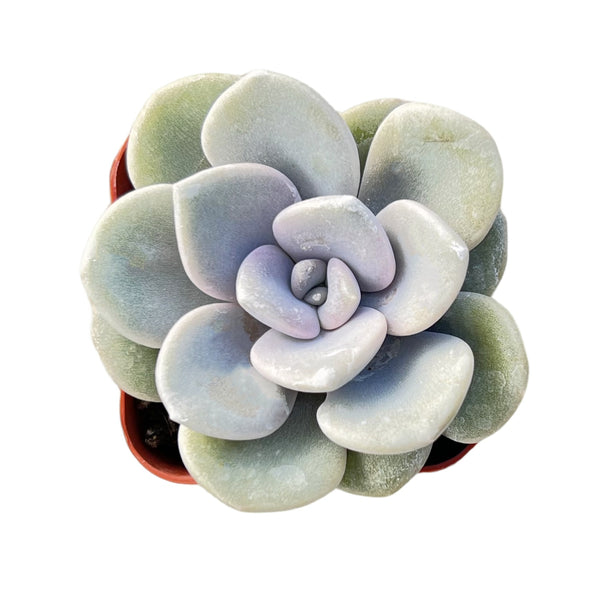
1. Graptopetalum 'Purple Delight'
Graptopetalum 'Purple Delight' is a beautiful rosette succulent known for its soft, dreamy color palette. Its thick, fleshy leaves are arranged in open rosettes and can display shades ranging from silvery white and dusty green to lavender, pink, and deeper purple.

As the plant matures, its stems gradually lengthen and new rosettes can develop along the growth, creating a fuller, clustered appearance. Eventually, the stems may trail over the edge of a pot, making Graptopetalum 'Purple Delight' especially attractive in shallow containers or arrangements where its offsets have room to spread.
2. Pachyphytum 'Apricot Beauty'
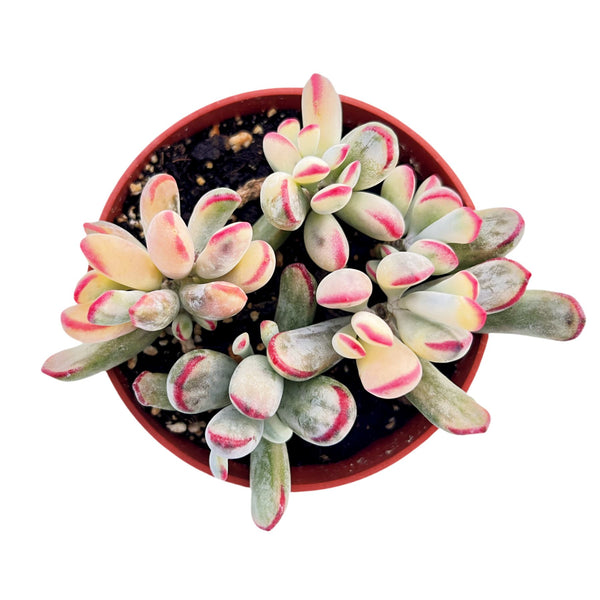
Pachyphytum 'Apricot Beauty' stands out for its variegated coloration that is one of its biggest attractions: green areas can be accompanied by creamy yellow and pink tones.

Unlike many thin-leaved succulents, Pachyphytum 'Apricot Beauty' has a particularly chunky and compact appearance. As it grows older, the stem can become visible beneath the rosette, and new growth may develop around the older stem. This combination of thick leaves, unusual variegation, and branching growth gives mature plants a charming, almost miniature-tree appearance.
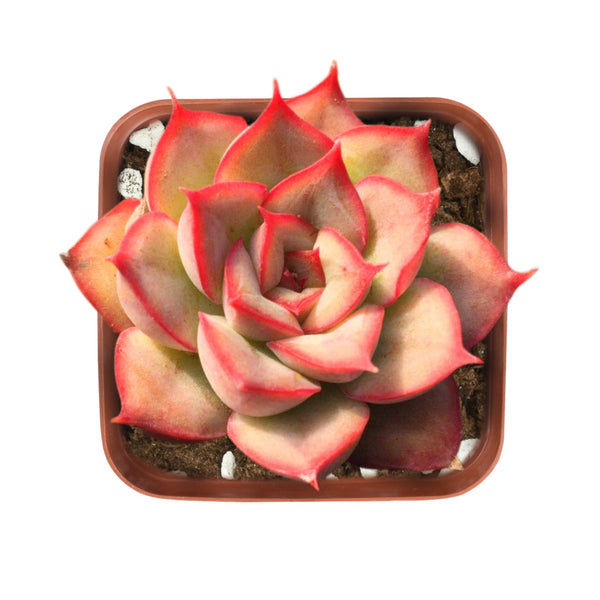
3. Echeveria Mebina
Echeveria 'Mebina' is a distinctive Echeveria with long, relatively narrow leaves arranged in a compact rosette. One of its most recognizable features is the strong red coloration along the leaf margins, which contrasts beautifully with the green foliage. When grown under suitable light, the red edges can become particularly noticeable, giving the rosette a crisp, colorful outline.

Echeveria 'Mebina' is also popular for its tendency to form clusters. Instead of remaining a single rosette indefinitely, mature plants can produce offsets around the base, gradually turning one plant into a group of connected rosettes. This makes it especially appealing for small succulent arrangements, where a naturally clustered Echeveria Mebina can create a fuller look without requiring several separate plants.
4. Sedum Treleasei
Sedum Treleasei has a very different appearance from the classic flat-leaved Echeverias on this list. It produces compact rosettes of thick, rounded, fleshy leaves, giving the plant a plump and somewhat cushion-like appearance. The foliage is generally green to blue-green, and the thick leaves make each rosette look full even when the plant is still relatively small.

One of its most attractive qualities is its ability to develop multiple rosettes as it grows. New growth can gradually fill in around the original plant, creating a dense cluster rather than leaving a large amount of empty space between stems. For growers who enjoy watching a small succulent gradually turn into a fuller specimen, Sedum Treleasei can be particularly rewarding.
5. Echeveria cv. Blue Apple
Echeveria cv. 'Blue Apple' is a striking blue-toned succulent with long, narrow, pointed leaves arranged into layered rosettes. Under bright light and cooler conditions, the outer leaves may develop much stronger red or magenta coloration, creating a dramatic contrast against the blue-green center.

'Blue Apple' is also an especially vigorous clumper. Instead of staying as one perfectly isolated rosette, it can produce offsets around the mother plant and gradually fill the pot with multiple heads.
6. x Sedeveria 'Rolly'
× Sedeveria 'Rolly' stands out for its thick, fleshy leaves with a distinctive waxy texture. The leaves have a smooth, slightly coated surface that gives the rosette a clean, polished appearance without looking overly glossy. Its foliage can range from fresh green to yellow-green, while the leaf edges and pointed tips may develop soft pink or reddish tones under bright light and favorable conditions. The combination of plump foliage, waxy texture, and contrasting leaf tips gives 'Rolly' a unique and attractive appearance.

As the plant matures, it can produce offsets around the main rosette, gradually developing into a fuller cluster. The additional rosettes make the waxy leaves even more prominent, creating a layered and textured display.
7. Echeveria Derenbergii Hybrid
Echeveria Derenbergii Hybrid's foliage can develop fresh green to blue-green tones, while stronger light may bring out contrasting coloration along the edges and tips. The plant also produces attractive cup-shaped yellow flowers with reddish markings on the tips of the flower parts.

The compact rosette shape makes this hybrid look especially attractive as it begins producing additional heads. Rather than losing its charm as it gets larger, a mature plant can become more interesting as several small rosettes grow around the original one. The contrast between the tidy rosettes and the developing offsets gives it a miniature garden effect.
8. Echeveria 'Chrissy n Ryan'
Echeveria 'Chrissy n Ryan' is an attractive rosette-forming Echeveria with fleshy leaves that taper toward pointed tips. The foliage typically has a fresh green to blue-green appearance, while the outer portions and tips can develop noticeable pink or reddish coloration.

Another appealing feature is its ability to develop offsets. Mature plants can produce smaller rosettes around the main plant, and these offsets gradually transform the single-head plant into a fuller cluster. A potted 'Chrissy n Ryan' therefore becomes increasingly decorative as it matures, with multiple rosettes creating more visual depth and variety.
9. Echeveria Minima
Echeveria Minima is one of the easiest succulents to recognize because of its miniature size and densely packed rosette. Its small blue-green leaves are tightly arranged, with defined points and attractive pink to reddish edges. Rather than producing a large, open rosette, Minima tends to maintain a compact, almost artichoke-like form.

Its real charm becomes apparent when it begins producing pups. New rosettes develop around the mother plant and gradually form a tight, low-growing colony.
10. Echeveria 'Violet Queen'
Echeveria 'Violet Queen' is a fast-growing variety with long, narrow, pointed leaves that curve slightly upward toward the center of the rosette. Its foliage is coated with a noticeable layer of farina, giving the leaves a silvery-blue or frosted appearance. Depending on growing conditions, the edges and tips can take on pink, rosy, or purple tones, creating a beautiful contrast against the cool-toned foliage.

What makes Echeveria 'Violet Queen' particularly suitable for a list of prolific offset producers is its ability to develop dense clumps. New rosettes can fill the space around the mother plant, eventually creating a large cluster with many individual heads. With its unusual silver-blue foliage and strong clumping habit, a mature Echeveria 'Violet Queen' can become much more impressive than a single young rosette.
Conclusion
Watching these plants thrive and grow is truly a magical experience, and it's no wonder they have become a favorite among gardeners and plant enthusiasts alike. So why not try your hand at propagating some succulent buds and witness the power of nature and the resilience of these amazing plants?