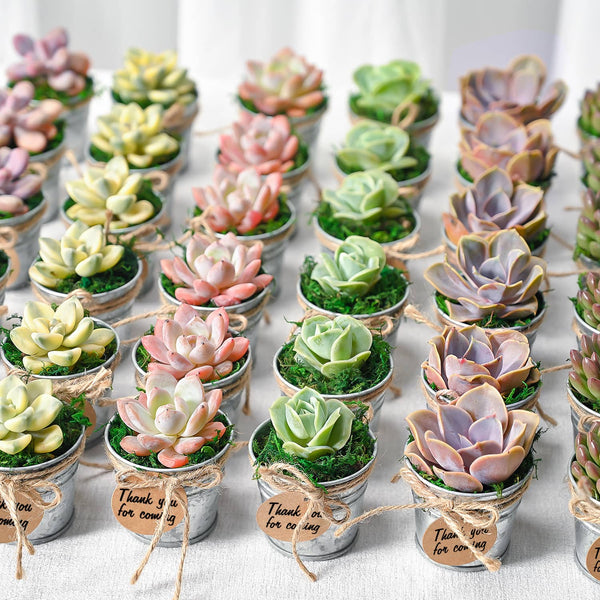
When it comes to colorful and eye-catching succulent plants, Sedeveria 'Pink Ruby' is undoubtedly one of the most popular choices among collectors. This beautiful hybrid combines desirable characteristics from both the Echeveria and Sedum genera, offering attractive coloration, compact growth, and easy maintenance.
One of the most appealing features of Sedeveria 'Pink Ruby' is its plump, bead-like leaves arranged in a tight lotus-shaped rosette. The leaves are thick, smooth, and glossy, creating a refined appearance throughout the year. During the growing season, the foliage is typically bright green, while cooler temperatures and strong sunlight can transform the leaves into stunning shades of ruby red, pink, and orange-red.

In addition to its vibrant colors, Pink Ruby readily produces offsets around the base of the plant. Over time, these offsets develop into dense clusters that resemble a bouquet of succulents, making mature specimens especially attractive in containers and succulent arrangements.
Whether you are new to growing succulent plants or an experienced collector, Sedeveria 'Pink Ruby' is an excellent choice thanks to its beauty, adaptability, and relatively simple care requirements.
Sunlight Requirement
Sunlight is the most important factor in developing the vibrant colors that make Sedeveria 'Pink Ruby' so desirable.
For the best coloration, provide at least 5–6 hours of direct sunlight each day. Outdoor growing areas such as patios, balconies, and sunny garden beds are ideal. Indoors, place the plant near a south-facing or west-facing window where it can receive the brightest possible light.
Under adequate sunlight, the leaves become compact, thick, and richly colored. During autumn and winter, the foliage often develops brilliant ruby-red tones that inspired the plant's name.

Insufficient light can lead to several common problems:
• Green or faded leaves
• Elongated stems
• Wider leaf spacing
• Loose rosette formation

During periods of intense summer heat, some afternoon protection may be necessary. Light shade during the hottest part of the day can help prevent sunburn while still maintaining healthy growth.

Temperature
Sedeveria 'Pink Ruby' adapts well to a wide range of temperatures and is generally more resilient than many other colorful succulents.
The ideal growing temperature ranges between 60°F and 80°F (15°C–27°C). Within this range, the plant produces steady growth and develops its best coloration.
Mature plants can tolerate temperatures down to approximately 25°F (-4°C) for short periods, although prolonged freezing conditions should be avoided. In regions with cold winters, moving plants indoors before frost arrives is recommended.
Temperature fluctuations between warm days and cool nights can also enhance leaf coloration, particularly during autumn.
Watering
Like most succulent plants, Sedeveria 'Pink Ruby' performs best when watered using the soak-and-dry method.
Rather than following a strict watering schedule, allow the soil to dry completely before watering again. A wooden skewer or chopstick inserted into the soil can help determine moisture levels below the surface.
When watering:
• Thoroughly soak the soil until water drains from the bottom of the pot.
• Avoid frequent shallow watering.
• Empty any excess water from trays or cachepots.

Seasonal Watering Adjustments
Spring and Autumn
These are the primary growing seasons. Most plants require watering every 5–10 days, depending on local temperatures, humidity, and soil composition.
Summer
During periods of extreme heat, growth slows and the risk of rot increases. Reduce watering frequency and ensure excellent airflow around the plant. In humid climates, watering may only be necessary every two to three weeks.
Avoid allowing the plant to sit in rain during hot weather, as prolonged moisture can quickly lead to stem and root rot.
Winter
Growth slows considerably during winter. Water sparingly and only when the soil is completely dry. If temperatures remain below 30°F (-1°C), it is often safest to withhold watering altogether until conditions improve.
Soil Requirments
Proper soil selection plays a major role in the health of Sedeveria 'Pink Ruby'. A potting mix that contains perlite, sand, and peat moss works well and can be determined based on the size of the plant.
If you want your Sedeveria Pink Ruby to grow taller and more prominent, using soil with a higher percentage of organic matter will support root development. On the other hand, if you prefer your plant's leaves to be compact and lush, a higher percentage of granular soil would be the best option. The latter is a specialized growing technique commonly referred to as "Succulent Controlled Cultivation" among succulent enthusiasts.
Commercial cactus and succulent soil mixes can also be used successfully when combined with additional drainage materials.
Pot
The first criterion for choosing a pot is good drainage and ventilation, so pots with drainage holes are best.
The size of the pot can influence plant growth:
• Smaller pots help maintain compact growth and tighter rosettes.
• Larger pots encourage faster growth and allow clusters to develop more quickly.
If your goal is to grow a lush multi-headed specimen, choosing a pot slightly larger than the plant's current size is often the best approach.

Propagation
Sedeveria 'Pink Ruby' is one of the easiest succulents to propagate. Offset propagation offers the highest success rate.
Propagation by Offsets
1. Select a multi-headed Sedeveria Pink Ruby.
2. Remove the succulent from the pot when the soil is dry.
3. Clear away soil from the roots.
4. Separate the offset you wish to propagate.
5. Trim any dried roots from the offset.
6. Let it air-dry in a clean container in a cool, ventilated area for two days.
7. Plant the offset in a new cactus mix approximately two days.
8. Water for the first time after about a week.

Leaf Propagation
Leaf propagation is also possible and can be an enjoyable way to produce multiple new plants.
Healthy leaves should be removed cleanly from the stem and placed on dry succulent soil until roots and baby rosettes begin to form. If you want to know more about succulent leaf propagation, click this blog to get the complete information.
How to propagate succulents by leaves?
Fertilization
Although Sedeveria 'Pink Ruby' does not require frequent feeding, occasional fertilization can support stronger growth and more vigorous offset production.
Apply a diluted liquid succulent fertilizer every four to six weeks during spring and autumn. Slow-release fertilizer may also be incorporated into the soil during repotting.
Avoid fertilizing during periods of extreme summer heat, as the plant's growth naturally slows during this time.
As with all succulents, remember the golden rule:
It is always better to under-fertilize than over-fertilize.
Common diseases and pests
Sedeveria 'Pink Ruby' is generally resistant to pests and diseases when grown in proper conditions.
Black Spot Disease
Black spots usually appear as small dark lesions on leaves or stems that gradually enlarge over time. Removing affected tissue and applying an appropriate fungicide can help prevent further spread.
Black Rot
Black rot is typically caused by excess moisture and poor airflow. Infected plants should be isolated immediately, and all affected tissue should be removed. Healthy portions may often be salvaged through propagation.
Mealybugs
Mealybugs occasionally appear in leaf crevices and around roots. Small infestations can be removed manually using alcohol-soaked cotton swabs, while larger infestations may require treatment with neem oil or insecticidal products.
Conclusion
Sedeveria 'Pink Ruby' is a colorful, easy-care succulent that brings year-round beauty to both indoor and outdoor collections. Its vibrant stress colors, compact rosette form, and tendency to produce abundant offsets make it an excellent choice for beginners and experienced growers alike.
With sufficient sunlight, proper watering, well-draining soil, and occasional fertilization, this charming succulent can reward growers with brilliant color and healthy growth for many years.