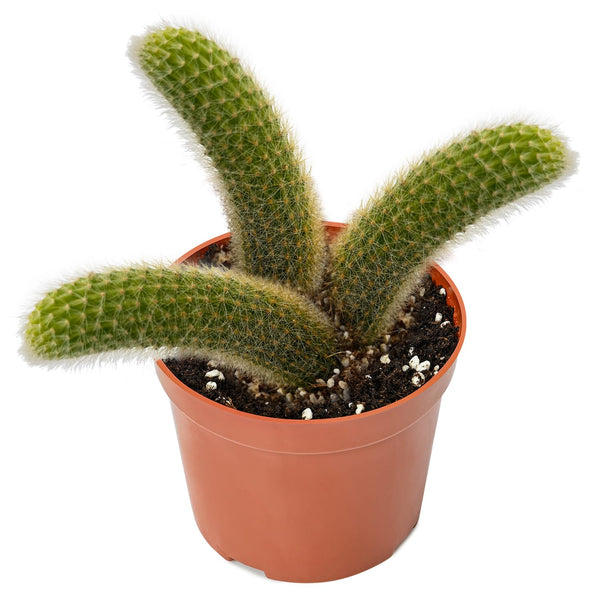
If you are looking for an unusual cactus that instantly becomes the centerpiece of a plant collection, the Monkey Tail Cactus is difficult to beat. Monkey Tail Cactus, scientifically known as Hildewintera colademononis (sometimes sold as Cleistocactus colademononis), is a trailing cactus native to the mountainous regions of Bolivia. Unlike desert cacti that grow upright under scorching sunlight, Monkey Tail Cactus naturally grows on rocky cliffs and steep slopes at elevations of around 1,000–2,500 meters. The climate there is bright but cooler, with frequent air circulation and seasonal rainfall.
With its long trailing stems covered in soft white hairs, mature stems can reach over 3 feet (1 meter) long. In spring and summer, healthy specimens may produce spectacular bright red flowers. The contrast between the furry white stems and vivid blooms is one of the reasons why Monkey Tail Cactus has become a favorite among collectors.

This guide covers everything you need to know about Monkey Tail Cactus care, including light, watering, soil, humidity, fertilization, and propagation.
Light Requirements
Monkey Tail Cactus loves bright light, but unlike many desert cacti, it does not appreciate intense scorching sunlight throughout the entire day. During spring and autumn, outdoor full sun or a south-facing window usually provides ideal growing conditions. With adequate light, the plant develops compact growth, dense white hairs, strong stems, and has a greater chance of producing its spectacular red flowers.
Summer, however, requires a slightly different approach. Although the long white hairs covering the stems offer some natural protection against strong sunlight, prolonged exposure to harsh afternoon sun can still cause yellowing stems, sunburn marks, dehydration, and a general loss of vigor. In hot climates, providing partial shade during the hottest hours of the day is recommended. Based on my own experience, I grow Monkey Tail Cactus outdoors year-round, including throughout the summer, and simply provide about 30% shade. Under these conditions, the plant grows vigorously and shows no signs of heat stress.

For indoor growers, placing the plant near a bright window is usually sufficient to maintain healthy growth. If natural light is limited, supplementing with a grow light can help preserve its compact form and encourage flowering. Since Monkey Tail Cactus naturally grows toward the light source, rotating the pot occasionally is also a good practice to maintain a balanced and symmetrical appearance.
Watering: The Biggest Mistake Most Growers Make
If there is one rule that applies to almost all cactus species, it is this: never water on a fixed schedule.
Monkey Tail Cactus stores a considerable amount of water inside its stems, allowing it to survive extended periods of drought. As a result, overwatering is far more dangerous than underwatering. The ideal watering frequency depends on several factors, including your local humidity, temperature, and the drainage properties of your potting mix. In humid regions, growers often increase the proportion of gritty materials such as pumice or lava rock in the soil and water less frequently to minimize the risk of rot.
Before each watering, it is a good idea to test the moisture level of the soil using a chopstick or wooden skewer. Insert it into the potting mix and pull it out after a few seconds. If it comes out dry, the plant can be watered thoroughly. If moisture remains, wait a few more days before checking again. That said, watering practices should also be adjusted according to the season.

Spring and autumn are the active growing seasons for Monkey Tail Cactus. During these periods, water deeply only when the soil has dried out completely. After watering, always discard any excess water collected in the saucer or tray to prevent the roots from sitting in moisture.
Summer is usually the most challenging season. High temperatures combined with excessive moisture can quickly lead to root rot or stem rot. During hot weather, watering frequency should be reduced, and it is preferable to water early in the morning or late in the evening when temperatures are lower. Besides watering less, ensuring excellent airflow is equally important. Good ventilation helps excess moisture evaporate and significantly reduces the risk of fungal diseases.
Fortunately, a healthy Monkey Tail Cactus is remarkably drought-tolerant. Many experienced growers water only sparingly throughout the summer. If the plant is grown outdoors in a pot with proper drainage holes, it may even survive the entire summer without supplemental watering, relying solely on occasional rainfall.

During winter, growth slows dramatically. If temperatures remain below 41°F (5°C) for an extended period, watering should be greatly reduced. Some growers stop watering almost entirely, especially when the plant is kept in a cool environment. However, if the stems begin to wrinkle noticeably or show signs of severe dehydration, a small amount of water can be given on a warm, sunny day.
Soil and Pot Selection
Monkey Tail Cactus prefers loose, airy, and extremely well-draining soil. In its native habitat, this cactus grows on rocky slopes where water drains away quickly, so replicating these conditions in cultivation is the key to success.
A suitable potting mix should contain a high proportion of mineral materials, such as pumice, perlite, lava rock, or coarse sand. A simple yet effective formula for most growers is:
60–70% mineral materials + 30–40% organic matter
This ratio allows the roots to access moisture and nutrients while preventing water from remaining around them for too long. Some growers prefer using 100% mineral substrates for cacti and succulents, but I don't usually recommend this approach unless you are comfortable fertilizing regularly. Although Monkey Tail Cactus has relatively low nutrient requirements, growing it in pure mineral media without supplemental feeding may result in slower growth, thinner stems, or an underdeveloped appearance.

Adding at least 10%–30% organic materials, such as peat moss, coco coir, or quality cactus potting soil, can provide a more forgiving environment and support healthier growth over the long term.
Choosing the Right Pot
Drainage is essential—and non-negotiable.
If you live in a region with hot and humid summers, terracotta pots are often a better choice than plastic or glazed ceramic containers. Their porous walls allow moisture to evaporate more quickly, improve airflow around the root system, and significantly reduce the risk of root rot.
For mature Monkey Tail Cacti, hanging baskets are especially popular. As the stems lengthen, they naturally cascade over the edge of the container, creating the spectacular "monkey tail" effect that gives the plant its name.

Regardless of the pot material, avoid using oversized containers. Large pots retain moisture for longer periods, increasing the risk of root problems. In most cases, a container that is only slightly larger than the root system will provide the best balance between healthy growth and proper moisture control.
Temperature and Humidity
Monkey Tail Cactus thrives in moderate temperatures, with an ideal growing range between 60°F and 80°F (16°C–27°C). Thanks to its origins in the mountainous regions of Bolivia, this cactus tolerates cooler weather better than many desert species. Nevertheless, it is not frost-hardy, and prolonged exposure to freezing temperatures can cause irreversible damage to both the stems and roots. If temperatures are expected to fall below 40°F (4°C), it is safest to move the plant indoors or provide protection with frost cloth or a greenhouse.
When it comes to humidity, Monkey Tail Cactus has very different preferences from tropical houseplants. It favors a relatively dry environment with good air circulation and dry foliage. High humidity alone is not necessarily harmful, but when combined with high temperatures and poor ventilation, it creates ideal conditions for fungal diseases, stem rot, and root problems.
For growers living in humid regions, a few adjustments can make a significant difference. Increasing the proportion of mineral materials in the potting mix, reducing watering frequency during summer, and improving air circulation with fans or open windows can all help keep the plant healthy. In fact, good airflow is often more important than humidity itself, as moving air allows excess moisture to evaporate quickly and prevents water from lingering around the roots or between the dense white hairs covering the stems.
Fortunately, Monkey Tail Cactus is quite adaptable. As long as the roots are kept well-drained and the growing environment remains airy, this unique cactus can thrive in a wide range of climates and reward growers with vigorous growth and its signature cascading stems.
Fertilization
Monkey Tail Cactus is not a heavy feeder. In fact, excessive fertilization often causes soft growth and weak stems, which increases susceptibility to rot. During spring and early summer, a diluted cactus fertilizer can be applied every 4–6 weeks. A balanced fertilizer or one slightly lower in nitrogen usually works best.
Avoid fertilizing:
During extreme summer heat
During winter dormancy
The goal is not to force rapid growth. Healthy cactus cultivation is about maintaining balance rather than maximizing growth speed.

How to Propagate Monkey Tail Cactus
One of the most rewarding aspects of owning Monkey Tail Cactus is how easily it can be propagated.
Stem cuttings are by far the easiest and most reliable method.
Step 1: Select a Healthy Stem
Choose a mature stem that is healthy, firm, free of disease, and at least several inches long.
Using a sterile knife or scissors, cut the stem cleanly.
Step 2: Allow the Cutting to Callus
This step is extremely important. Place the cutting in a dry, shaded area for 5–10 days. The cut surface will dry and form a protective callus. Planting immediately often leads to rot.
Step 3: Prepare the Soil
Use a dry, well-draining cactus mix. Avoid wet soil at this stage. Plant the cutting shallowly so it remains upright.
Step 4: Wait for Roots
Place the pot in:
Bright indirect light, good airflow, warm temperatures, and do not water immediately. After about 2–4 weeks, roots will begin to develop. Only then should light watering begin.
Step 5: Gradually Increase Care
Once new growth appears, increase sunlight gradually. Water using the soak-and-dry method. Fertilize lightly during active growth. Before long, the cutting will become an independent plant.
Common Problems and Solutions
1. Stem Rot
This is the most common problem.
Symptoms:
Soft stems
Black spots
Foul smell
Collapsing growth
Cause:
Overwatering
Poor drainage
High humidity combined with heat
Solution:
Remove affected stems immediately.
Repot into dry soil.
Improve ventilation.
Reduce watering.

2. Yellow Stems
Possible causes:
Excessive sunlight
Nutrient deficiency
Heat stress
Solution:
Move the plant to filtered light and monitor watering habits.
3. Sparse White Hairs
If the characteristic furry appearance becomes thin, the most common reason is insufficient light.
Increase sunlight gradually or supplement with grow lights.
4. No Flowers
Monkey Tail Cactus flowers only when:
Mature enough
Receiving sufficient light
Experiencing seasonal temperature changes
Patience is often the secret ingredient.
Some plants may take several years before blooming for the first time.

Final Thoughts
Monkey Tail Cactus (Hildewintera colademononis) perfectly combines the charm of rare succulents with the resilience of traditional cactus species.
Its soft white hairs, trailing stems, and spectacular red flowers make it one of the most distinctive succulent plants available today.
Fortunately, caring for Monkey Tail Cactus is not difficult. Bright light, excellent drainage, careful watering, and good airflow are usually all it takes for this unusual cactus to thrive.
Whether displayed in a hanging basket on a sunny patio or grown indoors under bright light, Monkey Tail Cactus rewards patience with years of fascinating growth and an appearance unlike any other cactus in the plant world.