Summer is the most challenging season for succulents. High temperatures, humidity, and intense sunlight can easily lead to rot, dehydration stress, etiolation, or even plant loss. To help succulents survive this critical period, the core principles are: reduce watering, provide shade, ensure ventilation, and stop fertilizing. The following guidelines outline practical care strategies for summer protection.
1. Environmental Management: Location and Airflow Are Essential
Adjust Plant Placement
Avoid direct sunlight exposure
When temperatures exceed 30°C (86°F), most succulents enter dormancy or semi-dormancy. At this stage, they should be moved to a location with bright but indirect light. Strong midday sun should be avoided to prevent leaf scorching.
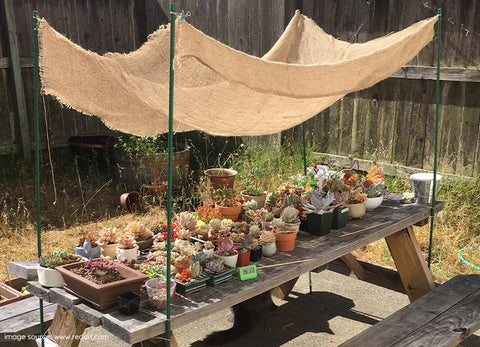
Image Credit: reddit.com
Ideal placements include east-facing or north-facing balconies, where gentle morning light helps maintain plant shape without overheating the plant in the afternoon.
Prevent heat buildup and poor airflow
Succulents are extremely sensitive to stagnant, humid air. Enclosed balconies or indoor corners with poor ventilation should be avoided.

Improve airflow by using a fan to promote air circulation or elevating pots to allow heat to dissipate from the base more effectively.
Protect from rain exposure
Summer rainfall can be dangerous for succulents. Water accumulation in leaf rosettes or soil combined with high temperatures often leads to root rot and stem black rot. Outdoor plants should be moved under shelter or protected with a rain cover.

Artificial Cooling (Optional)
In air-conditioned environments, succulents can benefit from lower temperatures. However, insufficient light in such conditions may cause etiolation (stretching). Even indoors, plants should receive 4–6 hours of gentle light daily, and watering frequency must be significantly reduced.
2. Water Management: Keep Dry, Water Precisely
Watering Principles
Strictly reduce watering
During summer, succulent metabolism slows significantly, and water demand drops to a minimum. Follow the principle of “less is better than more.”
In general, watering every 15–30 days is sufficient. During deep dormancy, intervals may extend beyond one month.
How to determine when to water
Do not rely solely on the dryness of the soil surface. Instead, observe the plant and soil conditions more carefully:
- Lower leaves becoming slightly soft or wrinkled
- Soil is completely dry throughout the pot
- A wooden stick inserted into the soil comes out dry

Only when both the plant shows mild dehydration signs and the soil is fully dry should minimal watering be considered.
Best watering time
Water in the evening or at night when temperatures are cooler. Avoid watering during midday heat, as trapped moisture combined with high temperatures can “steam” the roots and lead to rot.
Watering Techniques
Water along the pot edge
Use a narrow-spout watering can or spray bottle to apply water slowly along the inner edge of the pot. Avoid getting water into the center of the rosette or leaf gaps, as trapped moisture can quickly cause black rot in hot conditions.
Avoid bottom soaking (if possible)
Unless the plant is severely dehydrated, bottom watering is not recommended during summer, as prolonged soil saturation increases the risk of root rot and slow drying.
3. Fertilization and Maintenance: Stop Intervention, Remove Risks
Stop Fertilizing
When temperatures exceed 95°F (35°C), succulent metabolic activity drops significantly, and growth nearly stops. Fertilizer applied during this period cannot be absorbed and may instead burn the roots.
Therefore, fertilization should be completely suspended throughout the summer and resumed only when temperatures cool in autumn.
Remove Dead Leaves Regularly
Remove naturally dried or detached lower leaves to keep the soil surface clean and well-ventilated. Accumulated dead plant material can harbor bacteria and pests such as mealybugs, increasing the risk of rot and infestation.

Important: Only remove leaves that are fully dried and naturally detached. Do not forcefully remove semi-attached leaves, as this may damage the stem and lead to infection.
Pest and Disease Control
Summer is a peak season for pests such as mealybugs. If infestation is detected:
- Isolate affected plants immediately
- Treat with appropriate insecticides such as imidacloprid-based solutions or specialized scale insect treatments
- Severe infections may require soil drenching or spraying
For severe black rot cases:
- Perform emergency “head cutting”
- Remove all affected tissue until healthy, clean tissue is visible
- Dust wounds with fungicide powder
- Allow cuttings to dry for 24–48 hours before replanting in dry soil

4. Key Prohibitions: The “4 Do Not” Rules
Do not repot
Summer root systems are weak and unstable. Repotting often leads to transplant failure, rot, or collapse. Repotting should be done in spring or autumn only.
Do not expose to strong sun
Most succulents require 30–50% shading during summer. Direct sunlight can cause dehydration and leaf damage.
Do not overwater
Do not water simply because leaves appear soft. This may be a normal dormancy response rather than dehydration.
Do not fertilize
No additional nutrients are required during dormancy, and fertilization may cause serious damage.
5. Special Situations and Emergency Handling
Leaf Translucency or Black Rot
If leaves become translucent (water-soaked appearance) or stems turn black:
- Immediately remove all affected parts
- Cut back until only healthy tissue remains
- Apply fungicide powder to the wound
- Air-dry for 24–48 hours
- Replant in dry, well-draining soil
Etiolation (Stretching Due to Low Light)
If plants become stretched due to insufficient light:
- Do not perform major corrective pruning during the summer
- Use supplemental grow lights if necessary
- Wait until autumn for structural pruning, beheading, or reshaping

Conclusion
By following these summer care principles—controlled watering, shaded placement, strong ventilation, and minimal intervention—succulent plants can safely pass through the most stressful season of the year. Proper summer management lays a strong foundation for vigorous growth and color expression in autumn, when succulents typically enter their most active and beautiful growth phase.