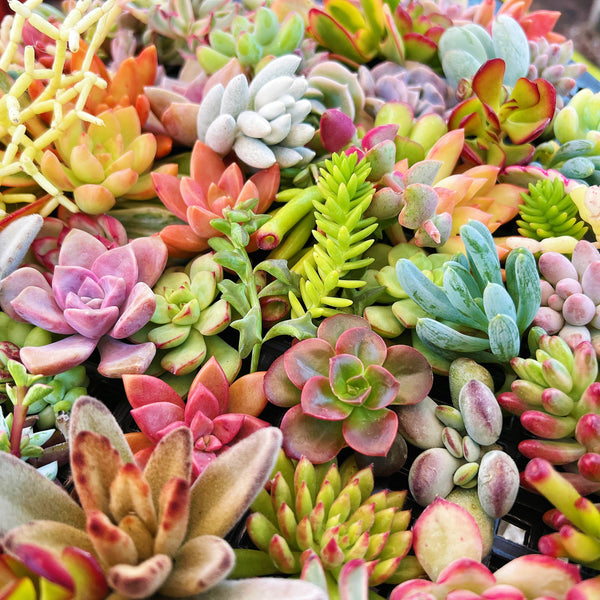
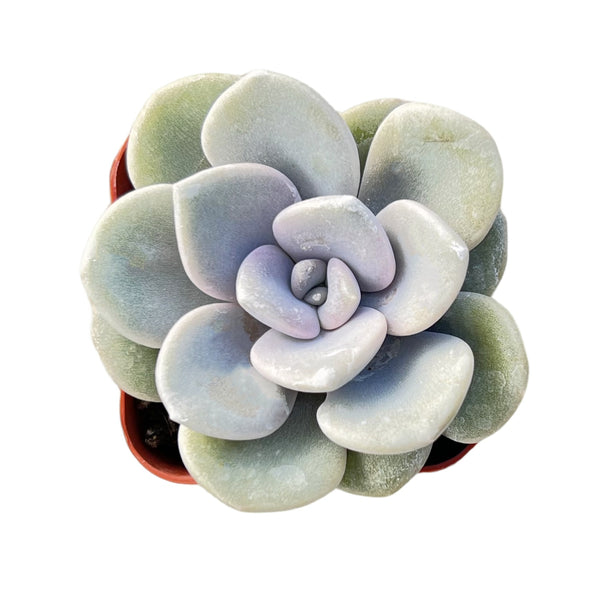
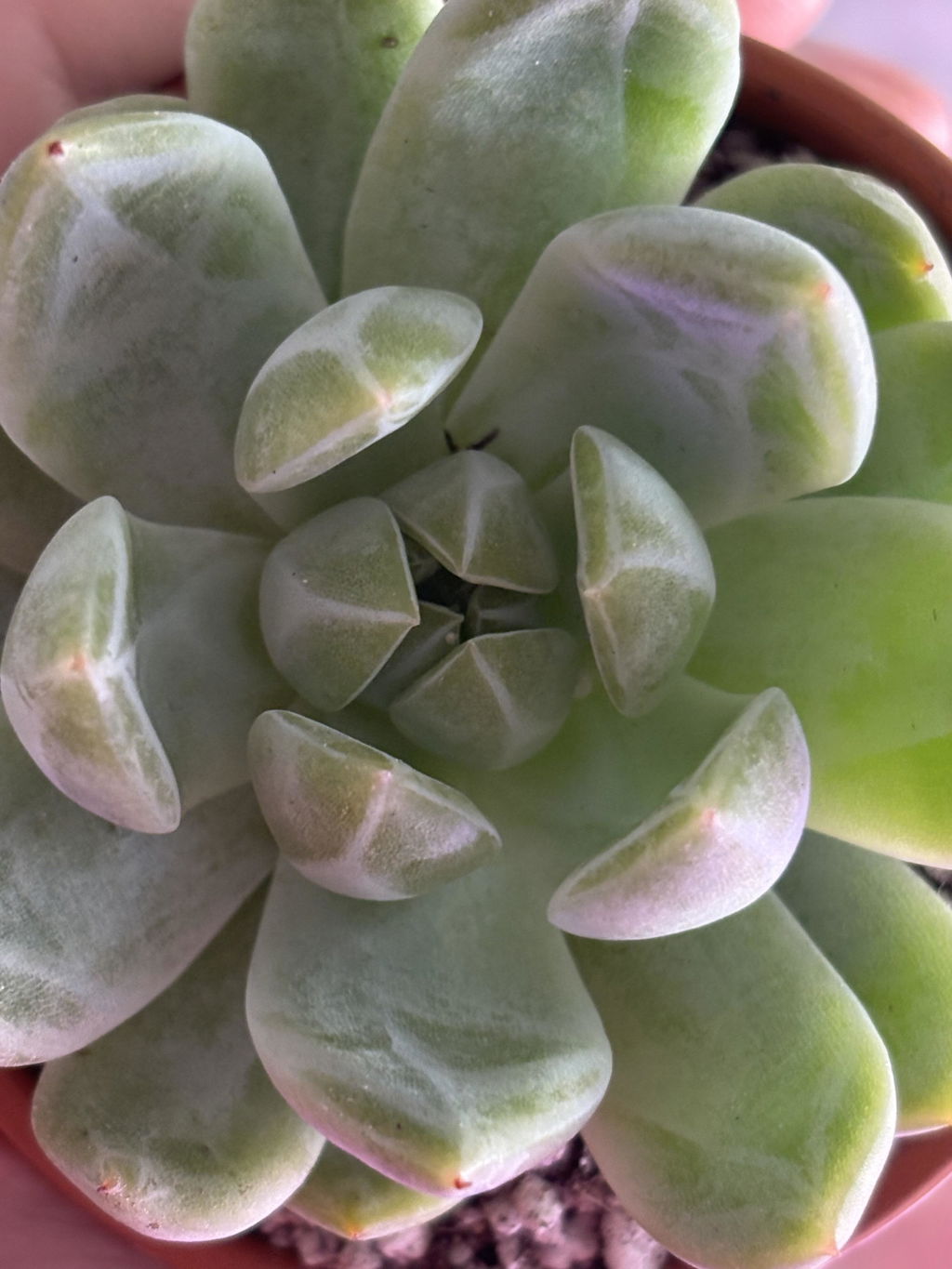
Korean succulents have become a global obsession in the last decade. Their tight rosettes, powdery pastel colors, dramatic stress tones, and photogenic appearance make them some of the most desirable collector plants on the market. Many plant lovers associate “Korean succulents” with rare hybrids, luxury packaging, and premium pricing—especially in the Echeveria world.
However, before diving into the most famous varieties, it is important to clarify one key truth:
Many succulents called “Korean succulents” did not actually originate in Korea.
In many cases, these varieties may have genetic origins in Mexico, Central America, or hybrid breeding lines developed outside of Korea. What makes them “Korean” in the eyes of collectors is that South Korea has one of the most advanced, sophisticated, and visually-driven succulent cultivation industries in the world. Korean growers are extremely skilled at selecting superior plants, refining growth forms, intensifying color through controlled environments, and developing market-ready cultivars that look better than the same plants grown elsewhere.

In short, Korea didn’t necessarily create every variety—but Korea helped maximize their full potential, which is why these succulents became famous under the Korean succulent label.
In this blog, we’ll explore 20 popular Crassulaceae succulents strongly associated with Korean cultivation, including their origin and background, their connection to South Korea, and why they became globally popular.
20 Famous "Korean Succulents" Loved by the World
1. Sedeveria Pink Ruby
Origin:
An intergeneric horticultural hybrid combining Sedum and Echeveria genetic traits, tracing back to ancestral species native to the arid mountains of Mexico and Central America.
Connection with South Korea:
Korean commercial nurseries selected specific clones of this hybrid that exhibited an extreme propensity for multi-head clumping and compact, low-profile growth. They systematized its mass production, branding it as a premium specimen for miniature arrangement work.

Aesthetic & Market Appeal:
Pink Ruby is one of the most iconic “Korean style” succulents. It forms a tight rosette with thick, pointed leaves and develops vivid pink-to-red tones under strong sun and cool temperatures. Korean growers popularized this plant through consistent production of compact, high-color specimens that look like polished gemstones. Marketed heavily for its ability to transform from basic green to brilliant red faster than almost any other hybrid.
2. Echeveria Madiba
Origin:
A chance seedling mutation was discovered within a batch of Echeveria lilacina seedlings at the Paco Serrano nursery in Spain. It honors the late Nelson Mandela, utilizing his Xhosa clan name, "Madiba."
Connection with South Korea:
While born in Spain, E. 'Madiba' achieved legendary global status in South Korea. Korean growers recognized that its unique genetic code allowed it to handle aggressive hydration control. Making it desirable by producing plants with extremely symmetrical growth and thick leaf stacking, which makes it stand out in photos and collector displays.

Aesthetic & Market Appeal:
Highly prized for its rigid, triangular, silver-gray leaves. As the plant matures under high-intensity light, the margins develop a heavy, undulating waviness and a distinct downward curl. Under thermal stress, the leaf tips and crinkled margins blush a distinct coral-pink and pastel orange, making it a high-value architectural centerpiece in collector circles.
3. Graptoveria Lovely Rose
Origin:
A deliberate intergeneric cross between Graptopetalum and Echeveria species, utilizing parentage rooted in Mexico.
Connection with South Korea:
Korean hybridizers took this mutation and maximized its visual consistency through rigorous micropropagation. They turned what was initially a finicky collector's curiosity into a highly stable, uniform commercial crop, creating the global trend of cultivating them in dense, clustered "rose bouquets."

Aesthetic & Market Appeal:
Lovely Rose's morphology is unique: the leaves are thick, short, and curl sharply upward and inward, and often show warm pink edges or a dusty purple blush. It is immensely popular due to this literal floral mimicry, making it a staple for social media marketing and high-volume retail.
The name “Lovely Rose” is also a major factor—it is easy to remember and fits the plant’s appearance perfectly.
4. Echeveria 'Pink Champagne'
Origin:
A prominent member of the Korean-developed 'Champagne' series, originating from complex crosses involving Echeveria laui and Echeveria agavoides cultivars.
Connection with South Korea:
This variety represents a direct success of Korean hybridizing programs, engineered to merge the massive waxy protection of E. laui with the sharp structure and structural toughness of the Agavoides group.

Aesthetic & Market Appeal:
Famous for its striking geometric angular facets, stark white impression lines are left on the leaf surfaces from being compressed tightly in the central bud before opening. The rosette often shows creamy green centers with pink blush on the outer leaves, and flushed a deeply saturated mahogany or a muted burgundy, especially in cooler seasons. It became popular largely due to its photogenic coloring and its elegant, upscale name.
5. Echeveria ‘Monroe’ / Echeveria ‘Orange Monroe’
Origin:
A selective line-breeding project stemming from the classic cross of Echeveria laui and Echeveria colorata (specifically the 'Brandtii' or wild forms native to Mexico).
Connection with South Korea:
This variety is considered one of the most famous Korean Echeverias of all time. Korean growers cultivate and select shorter, chubbier, more obovate leaves. They effectively rebranded the finest stressed clones as "Orange Monroe."

Aesthetic & Market Appeal:
It features exceptionally thick, spoon-shaped leaves arranged in a perfectly symmetrical, rounded dome. The entire plant is shielded by a dense layer of powdery epicuticular wax (farina). When grown under an extreme temperature differential (warm days, cool nights near 45°F) combined with restricted watering, the white powder diffuses an underlying glow of intense pastel orange and salmon-pink. It remains one of the most commercially successful succulents in history due to this clean, frosted color transition.
6. Echeveria 'Ariel'
Origin:
Shares a closely related genetic blueprint to the 'Monroe' lineage, born from E. laui and E. colorata hybrid pools.
Connection with South Korea:
Developed and stabilized within Korean nursery circuits as a structurally tougher, more robust alternative to standard 'Monroe' imports.

Aesthetic & Market Appeal:
While similar to 'Monroe' in its powdery white farina coverage, 'Ariel' is distinguished by its broader leaf width and a pronounced, sharp terminal spine at the leaf apex. It is highly favored by commercial growers because its stress coloration is exceptionally stable; once it transitions into its deep, fiery orange-crimson state, it holds the color for months, resisting reverting back to green even during seasonal periods of lower light.
7. Echeveria 'Star Mark'
Origin:
A specialized horticultural hybrid developed within East Asian collector networks, utilizing advanced Echeveria selections.
Connection with South Korea:
Highly integrated into the Korean "orange series" export market, where it was selectively bred to maximize leaf translucency.

Aesthetic & Market Appeal:
Unlike standard opaque rosettes, 'Star Mark' features slightly longer, more slender, lanceolate leaves that radiate outward in a starburst pattern. Its baseline color is a clean chartreuse or lime green. When stressed, the outer layers develop a striking, semi-translucent "jelly" quality, turning a vibrant gradient of electric neon orange, candy pink, and soft red. It is heavily marketed to collectors seeking high-contrast, neon palettes.
8. Echeveria 'Agavoides Romeo'
Origin:
A spontaneous, naturally occurring red sport (somatic mutation) was discovered within a cultivation batch of Echeveria agavoides 'Corderoyi' in a European collection.
Connection with South Korea:
Because 'Romeo' is highly susceptible to stem rot if exposed to improper watering, European growers struggled to scale it. Korean nurseries revolutionized their production by switching entirely to ultra-porous, hard-grit mineral substrates, stabilizing the clone and mass-exporting healthy, robust specimens globally.

Aesthetic & Market Appeal:
Completely devoid of farina, 'Romeo' possesses a highly reflective, glossy, waxy epidermis. The entire rosette is a deep, rich wine-red to purplish-brown, with the signature sharp, dark "ebony" tips characteristic of the Agavoides family. It commands a premium market presence due to its dramatic, dark coloration and stark, smooth texture.
9. Echeveria 'Red Velvet'
Origin:
A complex modern hybrid combining compact Echeveria varieties, bred within East Asian cultivation programs.
Connection with South Korea:
Korean nurseries pioneered the marketing and aesthetic tuning of this variety, focusing specifically on cultivating a phenomenon known as the "sugar heart."
Aesthetic & Market Appeal:
For most of the year, 'Red Velvet' presents as a tight, unassuming rosette of pale greenish-white leaves covered in a light misting of farina. However, under precise cooling protocols, the plant ceases vegetative growth, and the absolute core of the rosette synthesizes an intense concentration of anthocyanin. The center turns an opaque, velvety, blood-red color, creating a stark, high-contrast focal point that looks like a glowing ember nestled in ice.

10. Echeveria 'Silhouette'
Origin:
An intentional horticultural cross developed to emphasize clean geometry and sharp margin transitions.
Connection with South Korea:
Extensively produced and perfected by Korean growers who utilized it as a benchmark for measuring optimal greenhouse UV-light exposure.

Aesthetic & Market Appeal:
Regarded as one of the most geometrically flawless hybrids available. It forms an immaculate, tight rosette of soft mint-green leaves. Its defining commercial feature is its wide, translucent, hyaline leaf borders. Under intense full-spectrum light and cool air, these clear borders undergo an intense chemical shift, turning a glowing, neon hot pink. The color frames each leaf perfectly, creating a crisp "silhouette" effect that is highly appealing to design-conscious collectors.
11. Echeveria 'Suyon'
Origin:
A distinct hybrid variant sometimes tracked under the regional selection names 'Suryan' or 'Suyon,' deriving from thinner-leaved Echeveria genetic lines.
Connection with South Korea:
South Korean commercial nurseries capitalized on this plant’s unique growth habit, shaping it through strategic pruning into multi-headed, architectural clusters that mimic miniature bonsai trees.

Aesthetic & Market Appeal:
Deviating from the thick, chunky leaf trend, 'Suyon' features relatively thin, spade-shaped, slightly undulating leaves with lightly ruffled edges. It is highly dynamic; its chlorophyll breaks down rapidly under environmental stress. Within a short two-week window of cold exposure, a multi-headed jade cluster transforms into a striking mound of shimmering copper-orange, coral, and sunset-red.
12. Echeveria 'Amazing Grace'
Origin:
A micro-hybrid developed in East Asian breeding programs, targeting the ultra-compact, miniature collector market.
Connection with South Korea:
Korean growers refined the tissue culture and cultivation of this variety, scaling its availability while maintaining its tightly compressed leaf architecture.

Aesthetic & Market Appeal:
A true miniature, a mature 'Amazing Grace' rarely exceeds 3 inches in diameter but can stack over 50 layers of short, triangular leaves. The outer foliage is a ghostly, chalky white-pink due to thick farina. Under controlled stress, it develops a deep, glowing peach-to-magenta "sugar heart" at its core. Its small footprint and stunning color gradient make it one of the most profitable varieties per square foot of greenhouse bench space.
13. Echeveria 'Dark Ice'
Origin:
A specialized hybrid cross optimized for deep, cool-toned pigment expression, utilizing parents within the darker Echeveria color spectrum.
Connection with South Korea:
Propagated extensively in Korea to satisfy a market demand for varieties that contrast sharply with the standard "pink and red" palette.

Aesthetic & Market Appeal:
The leaves display a deep, smoky metallic blue-purple hue, covered in a fine layer of matte farina. This dark, dark base is sharply contrasted by its leaf margins and tips, which flush a bright, glowing violet-crimson under stress. The combination of dark interior flesh and glowing red borders gives it a moody, dramatic look that stands out in large collections.
14. Echeveria laui
Origin:
A true, distinct wild species discovered natively on near-vertical limestone cliffs within the Tomellín Canyon region of Oaxaca, Mexico.
Connection with South Korea:
While fundamentally a Mexican species, Echeveria laui has become an absolute cornerstone of South Korean succulent cultivation and hybrid breeding programs. Its unique genetic traits—specifically its extreme leaf chunkiness and unparalleled farina density—are highly prized by Korean hybridizers. It has been utilized as a foundational parent plant to engineer many of the market's most successful modern lineages, including the 'Champagne', 'Monroe', and 'Ariel' series, making the pure species a highly sought-after staple among elite Korean collectors.

Aesthetic & Market Appeal:
Represents the gold standard for waxy, farina-heavy succulents. The rosette consists of exceptionally plump, rounded, spoon-shaped leaves that are completely cloaked in a flawless, ultra-thick layer of chalky white powder. This gives the plant a ghostly, porcelain-like appearance that commands premium market prices.
15. Echeveria 'Blue Bird'
Origin:
A classic hybrid created by legendary breeder Frank Reinelt in the United States, believed to be a cross of Echeveria colorata and Echeveria desmetiana.
Connection with South Korea:
While bred in California, the hybrid was heavily refined and elevated in Korea. Korean nurseries selected the most compact, red-tipped clones and mass-produced them under high-mineral regimes to minimize leaf length and maximize thickness.

Aesthetic & Market Appeal:
Forms a stunning, architectural rosette of rigid, powdery blue-white leaves. Under autumn stress, the absolute tips and upper margins develop sharp, concentrated crimson-red points, mimicking the coloration of a wild bird's plumage. It is incredibly popular due to its structural resilience and dependable color contrast.
16. Echeveria 'Snow Bunny'
Origin:
A modern compact hybrid stemming from parentage selected for heavy wax deposition and a short growth habit.
Connection with South Korea:
Heavily stabilized and marketed by Korean nurseries, who cleverly utilized its cute, animal-centric name to drive massive sales across international retail platforms.

Aesthetic & Market Appeal:
True to its name, 'Snow Bunny' features a highly compressed, chunky structure with thick, spade-shaped leaves. The entire plant looks as though it has been carved from frosted ice, maintaining an icy white-lavender or soft gray-pink tone year-round. It offsets readily from the base, allowing growers to quickly form dense, snowy mounds of miniature rosettes.
17. Echeveria 'Trumpet Pinky'
Origin:
A dramatic, monstrous mutation (monstrous growth form) of Echeveria 'Pinky' (which itself is a cross of Echeveria shaviana and Echeveria affinis).
Connection with South Korea:
Monstrous mutations are often unstable and prone to reverting to standard rosettes. Korean propagation specialists successfully stabilized this tissue line through rigorous selection, allowing it to be reliably mass-produced for the global collector market.

Aesthetic & Market Appeal:
A highly sought-after novelty. Instead of flat leaves, the foliage completely fuses along the margins to form hollow, tubular, trumpet-like cylinders. The interior of the tubes is a soft blue-green, while the fluted outer rims turn a brilliant, saturated candy-pink when exposed to UV light and cold nights. Collectors love it because it has personality—its shape stands out even if the color is subtle.
18. Echeveria 'Agavoides Water Lily'
Origin:
A hybrid combining the genetic durability of the Agavoides group with the elegant, open-petaled structural symmetry of softer Echeveria species.
Connection with South Korea:
Refined in Korean commercial greenhouses to serve as a highly resilient landscape and indoor display plant that retains its shape under lower light conditions than the pure Agavoides species.

Aesthetic & Market Appeal:
The rosette structure perfectly mirrors a blooming aquatic water lily, featuring wide, upward-pointing leaves with sharp, translucent tips. The body of the plant is a glowing, luminous chartreuse or gold-green, which smoothly transitions into a rich coral-amber along the leaf margins when dried out. Its clean, bright color palette makes it a commercial favorite for high-end decorative pots.
19. Echeveria 'Mebina Variegata'
Origin:
A stable genetic chimera mutation of the classic miniature hybrid Echeveria 'Mebina,' originating within specialized Asian cultivation labs.
Connection with South Korea:
Korean growers mastered the optimization of this variegated form. Because variegated plants grow significantly slower due to reduced chlorophyll, Korean nurseries developed specialized, trace-mineral watering formulas to accelerate root health and stabilize the variegation lines.

Aesthetic & Market Appeal:
A magnificent, low-growing, freely clustering variety. Each miniature rosette features a central band of deep teal-green flanked by broad borders of creamy-yellow and stark white. When subjected to thermal drops, the chlorophyll-free white borders react instantly, blushing a brilliant, luminous neon pink. The resulting three-toned presentation (teal, cream, and neon pink) across an entire multi-headed cluster makes it a highly prized premium export.
20. Echeveria 'Malgan'
Origin:
An elite, highly coveted hybrid resulting from the crossing of Echeveria elegans Alba and elite Echeveria agavoides variants.
Connection with South Korea:
E. 'Malgan' represents the absolute pinnacle of luxury succulent breeding and selection in South Korea, where single, pristine heads once commanded hundreds of dollars in collector auctions.
Aesthetic & Market Appeal:
The ultimate expression of the "jelly succulent" aesthetic. The leaves are short, extremely thick, smooth, and entirely devoid of powdery farina. The epidermis possesses an exquisite, glass-like clarity. Under standard conditions, it is a pale translucent lime; when fully stressed via controlled starvation and cooling, it transforms into a glowing, solid apricot-amber or golden-orange jelly color.

Furthermore, much like Echeveria Agavoides series—E. Malgan has also spawned a vast array of hybrids, distinguished not only by their translucent leaf texture but also by other signature characteristics that include distinguished lines on the leaves, elongated tips like eyelashes, and "sugar hearts."
Conclusion
While the Crassulaceae family (specifically Echeveria) remains the commercial backbone of this style, Korean collectors have applied these exact same advanced cultivation principles to several other plant families, achieving equally spectacular results, such as:
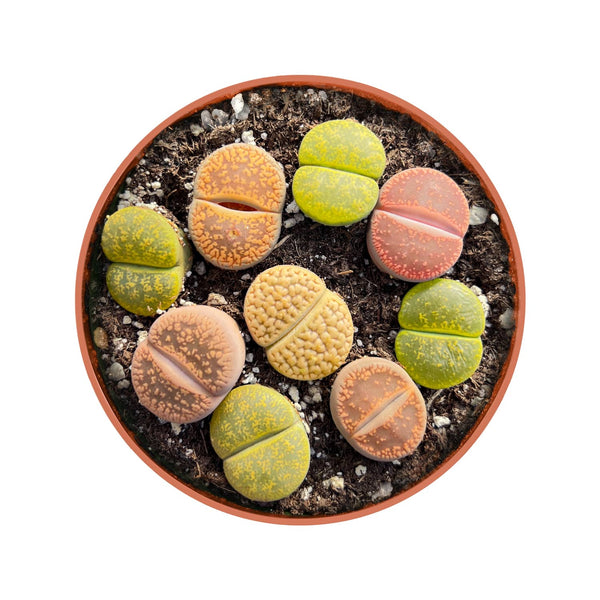
Haworthia truncata hybrids, Lithops lesliei 'Albinica', Lithops optica 'Rubra', and Astrophytum asterias 'Super Kabuto.'

The success of South Korea’s succulent industry relies heavily on a specialized cultivation strategy known as Controlled Stressing/ Controlled Cultivation. Rather than forcing rapid, leggy growth with high-nitrogen fertilizers and frequent watering, Korean master growers intentionally slow the plant's metabolism down and trigger the extreme potential of the plant itself.
You may get interested in: What is Controlled Cultivation?
If you are building a collection, the 20 Crassulaceae varieties listed above represent some of the most iconic and market-proven “Korean style” succulents—plants that consistently remain popular year after year