As summer comes to an end, one question often appears among succulent growers:
When should you stop watering your succulents in fall?
If you've heard that succulents should be completely dry throughout fall and winter, you may be tempted to put away your watering can as soon as temperatures begin to drop.
But that's not always the right approach.
For many succulents, fall is not the time to stop watering—it is the time to adjust your watering routine. As temperatures cool and summer heat becomes less intense, many plants need less frequent watering. At the same time, some succulents actually become more active during the cooler months.
The important distinction is between reducing watering and stopping watering completely.
Rather than following a calendar date, pay attention to your plant's temperature, soil, leaves, and growth pattern.

Don't Stop Watering Just Because Fall Has Arrived
Succulents don't know what month it is. They respond to their growing environment.
During the hottest part of summer, high temperatures and strong sunlight can cause potting mix to dry rapidly. As autumn arrives, temperatures gradually decrease and evaporation slows. That means the same watering schedule you used in July or August may become too frequent. But this doesn't automatically mean the plant should receive no water.
In many regions, early and mid-fall still provide relatively warm days and adequate sunlight. Many common succulents, including numerous Echeveria and other cool-season-growing varieties, can continue growing or begin recovering from summer heat.
For these plants, completely stopping water too early may cause unnecessary stress and, in severe cases, leave the roots excessively dry.
A better approach is to gradually extend the interval between waterings while continuing to let the soil dry thoroughly between waterings.
Think of it as a transition rather than a switch.

Control Watering vs. Completely Stopping Water
This distinction is one of the most important things to understand about fall succulent care.
Controlling water means watering less frequently while still providing moisture when the plant and soil indicate that it needs it.
Completely stopping water means intentionally withholding water for an extended period.
Most succulents do not need to be completely dry throughout all of fall.
For wide common varieties, you can continue using a "soak and dry" approach: allow the potting mix to dry thoroughly, then water deeply enough to moisten the root zone and allow excess water to drain away.
As temperatures continue to fall and the plant approaches dormancy, the interval between waterings can become longer.
Complete drought is generally more appropriate when conditions become genuinely cold, and the plant has entered dormancy, rather than simply because September or October has arrived.
Temperature Is One of Your Best Clues
Temperature can be a useful starting point when deciding how to change your fall watering routine.
If daytime temperatures are still occasionally reaching around 86°F (30°C) or higher, your succulent may still be experiencing summer-like conditions. In that situation, it may continue using water relatively quickly, especially when it receives strong sunlight and has good airflow.
Once temperatures become consistently cooler, watering can gradually become less frequent. As a practical growing guideline, when temperatures are consistently below roughly 82°F (28°C), many succulents can transition toward a cooler-season watering routine rather than automatically continuing their hottest-summer schedule.
However, temperature alone shouldn't determine your watering.
For example, a succulent kept indoors at 70°F (21°C) with strong grow lights may continue growing even in December. Meanwhile, an outdoor succulent exposed to cold nights may become dormant much earlier.

The most important temperature warning comes when nighttime temperatures approach freezing. If nighttime temperatures remain around 41°F (5°C) or lower, especially when freezing temperatures are approaching, watering outdoor succulents requires much more caution. Cold, wet soil can remain wet for a long time and may create unfavorable conditions around the roots.
When temperatures are approaching 32°F (0°C), cold protection becomes more important than maintaining a regular watering schedule for many tender succulents.
Check the Leaves Before You Water—or Stop Watering
Your succulent's leaves can provide another useful clue.
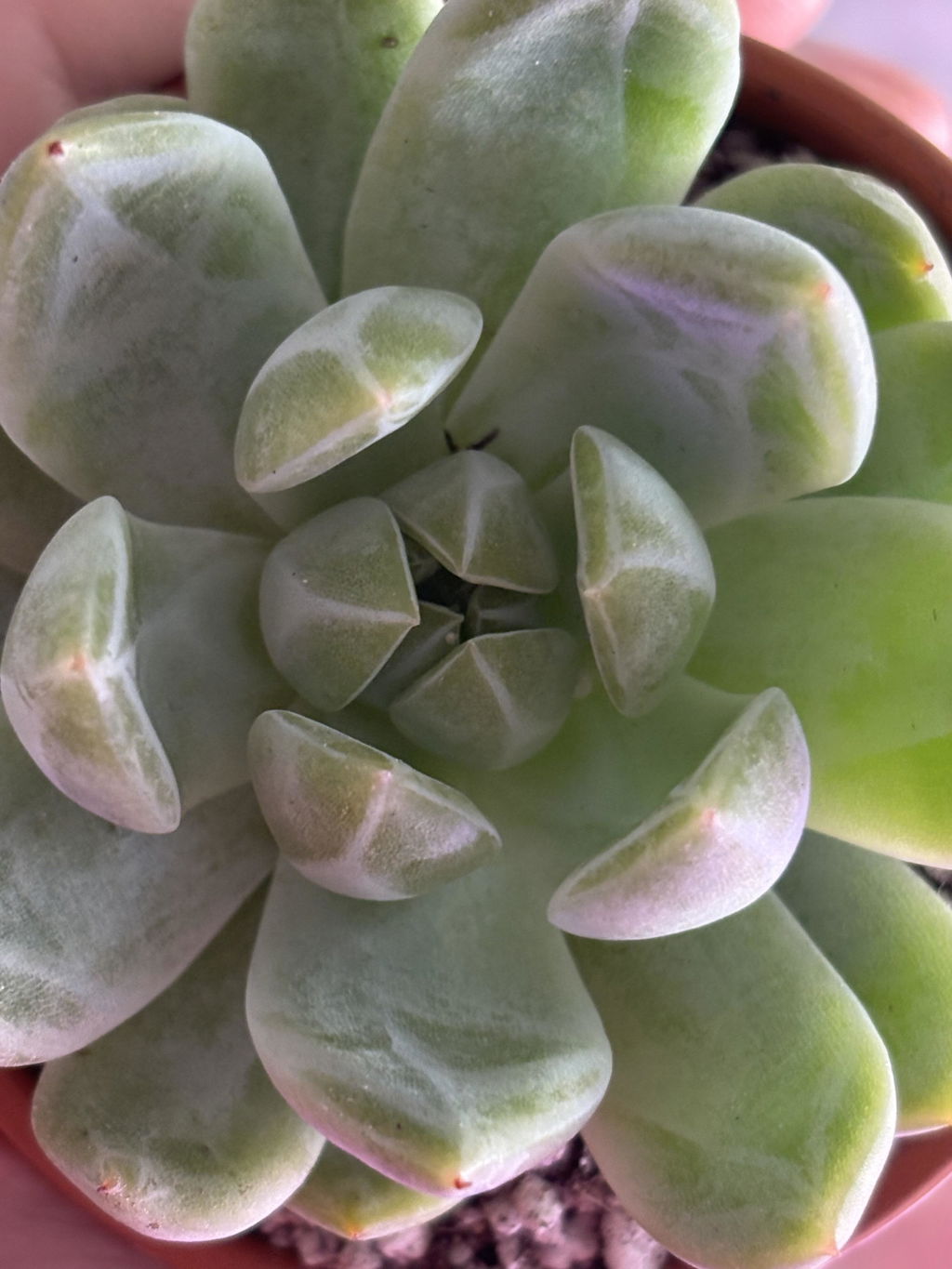
As the plant becomes slightly drier, you may notice subtle changes such as:
● Leaves becoming slightly softer
● Mild wrinkling
● A reduction in leaf firmness
● Leaves looking less plump or glossy
● Older bottom leaves naturally drying up

These mild changes do not necessarily mean something is wrong. In fact, a small amount of softening can tell you that the plant is beginning to use some of the water stored in its leaves.
However, there is an important difference between mild dehydration and severe dehydration.
If the leaves become extremely shriveled, curled, or begin dropping excessively, the plant may already be too dehydrated. At that point, simply continuing to withhold water is not necessarily beneficial. Instead, the plant needs to be evaluated to determine whether the roots are still functioning.
Check the Soil—Not Just the Surface
Another common fall watering mistake is assuming that dry-looking soil means the entire pot is dry.
Succulent pots can dry unevenly.
The surface may look completely dry while the lower part of the pot remains damp. This is especially common when temperatures have dropped, and evaporation has slowed.
Before watering, check the moisture deeper in the pot.
You can insert a wooden toothpick or similar tool into the soil and check whether it comes out with moisture or damp soil attached. Another simple method is to lift the pot. A pot that has become noticeably lighter after drying is usually a different situation from one that still feels heavy.
If the surface is dry but the inside remains damp, do not water simply because the top looks dry.

On the other hand, if the entire root zone has dried and the plant is showing signs that it needs water, extending the drought indefinitely may also be harmful.
The goal is not to keep the roots dry forever. The goal is to give them a healthy cycle of thorough watering followed by adequate drying.
New Growth Means Your Plant May Still Need Water
One of the easiest ways to determine whether a succulent is still active is to look for growth.
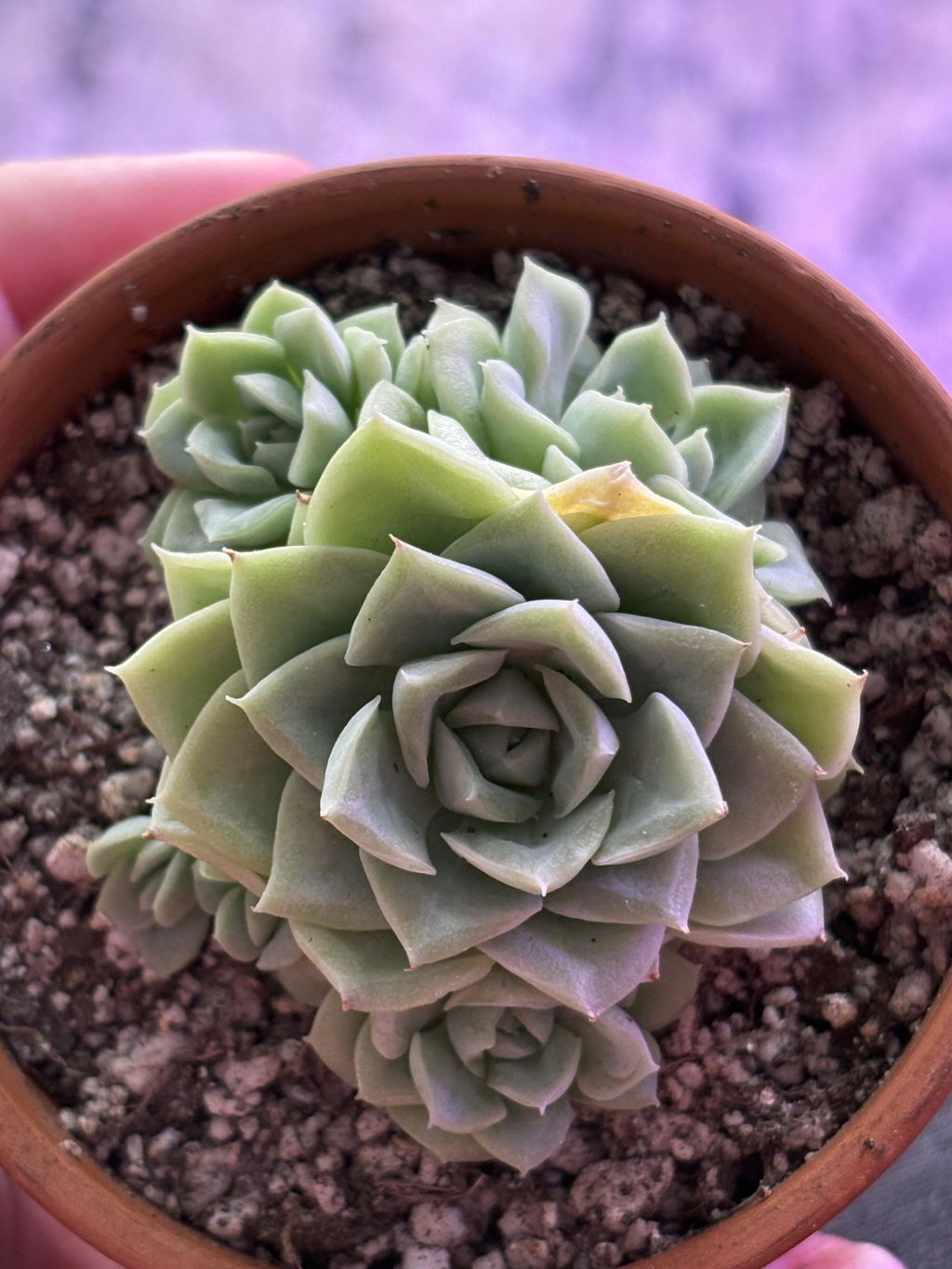
Check the center of rosette-forming succulents for signs such as:
● New leaves emerging
● The center of the rosette beginning to open
● New offsets developing
● Fresh roots or shoots
● New stems or branches appearing

If your succulent begins producing new growth as temperatures cool, it may be entering an active growing period rather than preparing for dormancy. This is particularly important because not all succulents follow the same seasonal schedule. Some plants are more active during cool weather, while others prefer warmer conditions and may become dormant during summer.
If a plant has stopped growing for a long period and continues to look increasingly weak, however, don't automatically assume it is dormant.
A severely declining succulent may have root damage or another underlying problem.
If the plant looks dehydrated but does not respond after appropriate watering, checking the roots may be more useful than simply adding more water or continuing to withhold it.
Not All Succulents Have the Same Fall Schedule
Plant variety matters.
A blanket rule such as "stop watering all succulents in fall" can cause problems because different succulents have different growth cycles.
For example, Aeonium and other summer-dormant succulents may behave very differently from many common Echeveria and other cool-season-growing succulents.

A summer-dormant plant may naturally slow down during hot weather and become more active when temperatures cool. In that case, fall can actually signal the beginning of its growing season.
Once the plant shows signs that it has awakened and is producing fresh growth, its water requirements may increase again.
This is why knowing the basic growth cycle of your particular succulent is so useful.
Before making a winter watering plan, ask:
Is this plant normally active during cool weather, or does it prefer to grow during warmer months?
That answer can completely change your approach.
What If You're Not Sure Whether to Water?
Sometimes the plant doesn't give you an obvious answer.
Maybe the soil is dry, but the leaves still look fairly plump. Or perhaps the plant looks slightly dehydrated, but you're worried that its roots may not be functioning properly.
In these situations, a cautious test watering can help. Instead of immediately soaking a severely weakened plant, you can apply a small amount of water around the pot's edge and observe what happens over the next 24–48 hours.

If the leaves begin to regain some firmness, that suggests the plant may still have functioning roots and can take up water.
If there is no noticeable response, especially when the plant remains severely dehydrated, the problem may not simply be a lack of water. The roots may be damaged, dead, or affected by previous overwatering. In that situation, removing the plant from its pot and inspecting the root system may be more useful than continuing to experiment with watering.

This method should be considered a troubleshooting technique, not a replacement for normal deep watering when a healthy plant's soil is completely dry.
When Should You Actually Stop Watering?
For many outdoor succulents, the decision to stop watering completely becomes more relevant once cold weather is firmly established and nighttime temperatures are consistently around 41°F (5°C) or below, especially as freezing temperatures approach.
At that point, many tender succulents will slow down significantly or enter dormancy. If the plant is dormant, temperatures are low, and the soil is staying wet for a long time, additional water may do more harm than good.
However, there is no universal temperature or calendar date that applies to every succulent.
An indoor plant growing under bright light may continue to need occasional watering throughout winter. A winter-growing succulent may also need water during the cooler season.
So instead of asking:
"Is it fall yet?"
Ask:
"Is my succulent still growing, how cold is its environment, and has the soil actually dried out?"
That is a much more useful question.
A Simple Fall Watering Guide
You can use the following as a general framework:
Warm fall weather:
If temperatures are still high and the plant is actively growing, continue watering when the soil dries. Don't abruptly switch to a winter schedule.
Cooler fall weather:
As temperatures consistently fall, gradually increase the interval between waterings. Continue checking the soil rather than watering according to a fixed schedule.

Cold nights:
When nighttime temperatures consistently approach 41°F (5°C), begin paying much closer attention to dormancy, cold protection, and how long the soil remains wet.
Near-freezing conditions:
For tender outdoor succulents, prioritize protection from freezing temperatures and avoid keeping cold plants in wet soil.
Winter-growing varieties:
Don't automatically stop watering. Continue to monitor growth and soil moisture according to the plant's natural seasonal cycle.
You may wonder: How to Water Succulents in Winter?
Final Thoughts
So, when should you stop watering succulents in fall?
The answer isn't a specific date.
For most succulents, fall is a period of adjustment rather than immediate drought. As temperatures cool, you can gradually reduce watering frequency. But completely stopping water too early may leave an actively growing plant unnecessarily dehydrated.

Pay attention to four things above all:
Temperature. Soil. Leaves. Growth.
If the soil is completely dry and your succulent is still actively growing, it may need water.
If the soil remains damp in cool weather, wait.
If the plant is entering dormancy and nights are approaching freezing, watering should become much more conservative.
And if you're growing a summer-dormant or winter-growing succulent, learn its specific seasonal rhythm before changing its care routine.
The goal of fall watering isn't to keep your succulent completely dry.
It's to give the plant exactly what it needs as its environment changes—enough moisture to maintain healthy roots and growth, but not so much that cool temperatures and wet soil create unnecessary problems.
With a little observation, the transition from summer to fall doesn't have to be complicated. Your succulent will usually give you plenty of clues; you just need to know where to look.