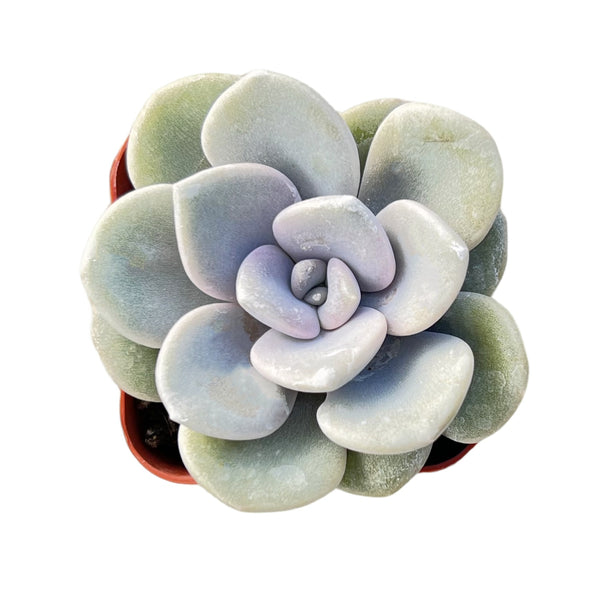
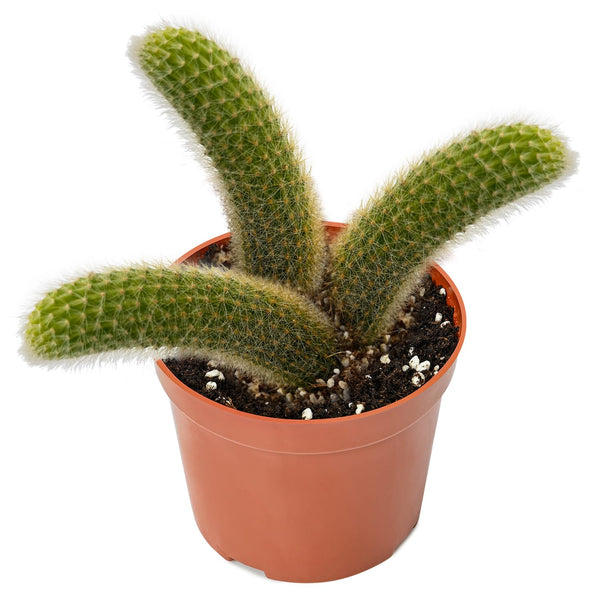
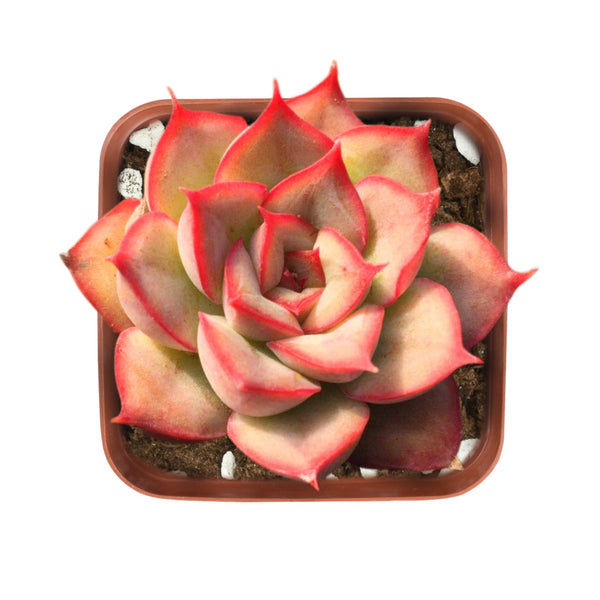
There is something undeniably magical about blue succulents. In a world dominated by red, pink, and green, Blue succulents bring a sense of calm and architectural elegance to any collection. —add a touch of serenity and architectural interest to any space. Whether you are looking for tight rosettes or tough guy, blue varieties often carry a thick coating of epicuticular wax (farina) that gives them a dreamy, frosted appearance.
Here are 16 beautiful blue succulent varieties to elevate your garden or indoor display.
1. Echeveria peacockii 'Desmetiana'
Origin: Central and Southern Mexico.

Appearance: This variety forms exceptionally tight, rose-like rosettes with many layers of overlapping leaves, creating a dense, "double blossom" effect. The foliage is a saturated, powdery sky-blue that can appear almost deep cerulean in the shadows. Each leaf is tipped with a fine, delicate margin of pink or red and ends in a sharp, refined point.

Characteristics: A prolific clumper, this form is known for its structural longevity. Mature specimens develop thick, woody stems and produce numerous offsets, eventually forming dramatic, mounded clusters. It is highly valued for its symmetry and its ability to maintain an orderly, rose-bud shape even as the colony expands.
2. Echeveria subcorymbosa Lau030
Origin: Oaxaca, Mexico.

Appearance: A miniature variety with very tight, compact rosettes. The leaves are rounded and chubby, displaying a ghostly blue-white color with slightly transparent margins. It thrives in the active season with proper sunlight and temperature stress, and turns into a beautiful blue-purple.

Characteristics: This plant is a "clumper," meaning it will naturally produce many offsets to form a dense colony. It is highly sought after for its ability to stay petite and tidy.
3. Echeveria 'Blue Light'
Origin: A cultivated hybrid (likely involving Echeveria cante).

Appearance: This is a high-impact variety featuring large, broad rosettes with wide, undulating (wavy) leaves. The foliage is a deep powder blue, but its most striking feature is the wide, intense neon pink or crimson border that runs along the ruffled leaf margins.

Characteristics: It grows into a significant specimen plant, often reaching over 12 inches in width. The wavy edges add a dynamic, moving texture to a garden. It requires bright light to maintain the intensity of its "neon" edges, which become even more vivid with temperature shifts.
4. Echeveria 'Snow Bunny'
Origin: Cultivated hybrid.

Appearance: This variety forms exceptionally dense, compact, and almost globular rosettes. The leaves are extremely thick, fleshy, and ovate (spoon-shaped), incurving tightly towards the center. The base color is a powdery, dusty blue-grey, but it is defined by distinctive, sharp pink to reddish-brown tips on every leaf. The very center of the rosette often displays a subtle pale lilac or lavender hue.

Characteristics: Known for a strong clumping habit, Echeveria Snow Bunny rapidly produces offsets to form tight mounds of rosettes. The foliage is incredibly durable due to its thickness. Stressed conditions (sun, cold, or low water) intensify the pink tips and the inner lavender tones, while the rosettes close up even more tightly.
5. Orostachys boehmeri (Chinese Dunce Cap)
Origin: Coastal areas of Japan (Kunashir Island).

Appearance: The plant consists of numerous tiny, compact, grayish-blue or pale greenish rosettes made of plump, rounded leaves. In its growing phase, it forms dense mounds and is distinguished by the numerous thin stolons (runners) it produces, each carrying a miniature 'pup' rosette, creating delicate chains that cascade downwards.

Characteristics: This is an incredible spreader and makes an ideal "spiller" for hanging baskets or container arrangements. It offsets prolifically via its runners. While mature rosettes eventually send up monocarpic flowering spikes (cones) and die back, the many surrounding pups ensure the colony continues to thrive.
6. Echeveria 'Blue Bird' (Thin-Leaf Variety)
Origin: A hybrid of E. colorata. and E. desmetiana.

Appearance: This variety is defined by its numerous, sharply pointed, and relatively thin leaves that form a dense, expansive rosette. The foliage is a striking icy blue with a heavy dusting of farina. Unlike the common thick-leafed version (Echeveria Blue Bird), this variety has a more "jagged" and architectural silhouette, with leaf edges that curve slightly upward, creating a ruffled or starburst effect.

Characteristics: This specific form is a prolific grower, often producing multiple layers of leaves that give the rosette a deep, multi-dimensional look. It is particularly valued for its sharp, clean lines and its ability to maintain a bright, luminous blue-white color even in intense light. While it shares the name with its chubbier cousin, this thin-leaf version offers a much more dramatic, lotus-like aesthetic.
7. Echeveria 'Blue Surprise'
Origin: Cultivated hybrid.

Appearance: This variety posses broad, rounded, and spoon-shaped (obovate) leaves that form a perfectly symmetrical, open lotus-like rosette. The leaves are notably thick and fleshy, often ending in a very subtle, soft point. While the core of the rosette displays a soft, silvery-blue or aqua-teal, the outer foliage shifts dramatically into rich shades of mauve and dusty pink with stress.

Characteristics: Echeveria Blue Surprise is loved for its iridescent quality. It can change color significantly depending on light exposure, shifting from blue to a soft pinkish-purple.
8. Pachyveria Glauca 'Little Jewel'
Origin: Hybrid (Pachyphytum x Echeveria).

Appearance: This variety is known for its distinctively long, slender, and cylindrical leaves that taper to a sharp point. The leaves have a unique "faceted" look with clear, flat planes along their length, resembling a precision-cut gemstone. The color is a deep, moody blue-grey or slate, heavily coated in a smooth farina that gives it a matte finish.

Characteristics: Unlike the tighter rosettes on this list, Pachyveria Glauca 'Little Jewel' has a more open and spiky architectural form. It is a hardy grower that develops a short, sturdy stem over time. Under bright light or slight stress, the leaf tips and the "facets" can take on a subtle violet or reddish hue, emphasizing their geometric, crystalline appearance.
9. Senecio serpens (Blue Chalksticks)
Origin: Cape Province, South Africa.

Appearance: This variety features distinct, fleshy leaves that are slightly curved and tapered, resembling small, chalky-blue beans or "fingers." The foliage is a soft, powdery aquamarine, covered in a thick layer of farina that gives it a velvety, matte finish. Unlike the strictly upright versions, this form grows in dense, matted clusters where the leaves point outward in a more relaxed, sprawling starburst pattern.

Characteristics: A fantastic groundcover or "filler" succulent, it is known for its ability to create a low, spreading carpet of cool blue. It is exceptionally resilient and drought-tolerant. It develops a beautiful "full" look when grown in clusters, with older growth providing a sturdy base for vibrant, light-blue new leaves at the tips.
10. Pachyveria 'Powder Puff' (Exotica)
Origin: Hybrid (Pachyphytum oviferum x Echeveria laui).

Appearance: This variety features thick, elongated, spade-shaped leaves that grow in dense, multi-layered rosettes. While the base is a soft silvery-blue, the tips and margins flush with a glowing pink and light orange under bright light.

Characteristics: Its most defining trait is its remarkable ability to naturally form thick, woody stems, allowing it to grow in an upright, tree-like fashion similar to a bonsai.
11. Graptopetalum pachyphyllum 'Bluebean'
Origin: Central Mexico.

Appearance: This variety is famous for its tiny, incredibly chubby, and jelly-bean-shaped leaves that form tight, rounded clusters. The foliage is a pale, translucent baby blue with a heavy powder coating. Each "bean" is tipped with a distinct, tiny dark red or burgundy "nail" at the very apex. While getting enough stress, the bean leaves will turn to pink and red.

Characteristics: Graptopetalum pachyphyllum 'Bluebean' is a prolific clumper, quickly filling its space with a dense, textured carpet of blue. It often produces numerous offsets from the base to create a mounded, "bubbling" effect. Its petite size and vibrant red tips make it an ideal choice for fairy gardens or as a high-contrast filler in mixed succulent pots.
12. Echeveria 'Blue Minima'
Origin: Derived from Echeveria minima (Mexico).

Appearance: This miniature variety is highly distinguished by its extremely dense, tight-spiraled rosettes. Each rosette consists of dozens of small, narrow, spoon-shaped leaves that taper to a sharp, fine point. The color is a consistent dusty-blue, heavily coated in farina, which makes the base foliage appear nearly white. Every leaf tip is finished with a tiny, vibrant coral-pink or dark red "nail".

Characteristics: Prolific clumping is its most defining trait. It rapidly produces offsets from the base, causing multiple rosettes to coalesce into a dense, rounded, mounded cushion. It is incredibly durable and maintains this tidy, matted growth habit. Bright light is essential to keeping the rosettes tight and ensuring the pink tips remain vivid.
13. Echeveria cv. 'Blue Apple' (Blue Elf)
Origin: Cultivated hybrid (Sedum x Echeveria).

Appearance: This is a versatile succulent that grows in dense, slightly upright clusters. Its leaves are long, narrow, and lance-shaped, forming tight, multi-layered rosettes. The color is a saturated blue-green with a smooth, matte finish. The plant is famous for its dramatic stress response; while generally possessing pink-tipped leaves, exposure to bright sun and cold will cause the margins and undersides of the outer leaves to flush a fiery, vivid magenta-red.

Characteristics: An incredibly vigorous grower and a reliable clumper. Echeveria cv. 'Blue Apple' rapidly fills a container, with mature rosettes often developing offsets on short stems. Its durable nature and frequent yellow flowering make it a highly rewarding specimen, especially as the red "apple" tones emerge with proper light.
14. Sedum dasyphyllum (Corsican Stonecrop)
Origin: Mediterranean region (Southern Europe/North Africa).

Appearance: This miniature succulent is composed of tiny, glaucous blue-green leaves that are exceptionally chubby and pebble-like. The leaves grow in tight, opposing pairs along short, delicate stems, creating a dense, beaded texture. The foliage is covered in a soft farina, giving it a cool, pastel-turquoise hue that can flush with pale pink or lavender when stressed.

Characteristics: Sedum dasyphyllum is a prolific spreader that forms soft, mounded cushions rather than a flat mat. It has a beautiful "overflowing" habit, making it a perfect choice for tucking into crevices, rock gardens, or as a textured "filler" that spills elegantly over the sides of containers. Despite its delicate appearance, it is quite hardy and maintains its compact, jewel-like form year-round.
15. Echeveria 'Moon Gad Varnish'
Origin: A hybrid of Echeveria Pulidonis and Echeveria derenbergii.

Appearance: This variety is characterized by its distinctive thin leaves that form a rosette with a notably flat center. The foliage is light blue-gray hue, but the leaf edges are exceptionally thin, almost delicate, and have a tendency to curl or undulate slightly.

Characteristics: One of its most prized traits is that it is highly prone to cresting. This allows it to develop into unique, fan-like "crested" forms that are incredibly artistic. Echeveria 'Moon Gad Varnish' is a hardy variety that maintains a tidy, low-profile shape.
16. Myrtillocactus geometrizans (Blue Candle Cactus)
Origin: Northern and Central Mexico.

Appearance: This striking cactus features smooth, glaucous stems in a vibrant, waxy blue-teal. It typically grows in an upright, candelabra-like fashion with 5–8 distinct, deep ribs that give it a sharp, geometric silhouette. The areoles are spaced along the ribs, bearing small, dark spines that contrast beautifully against the cool blue skin.

Characteristics: As shown in your images, this species is highly valued for its ability to form dramatic crested variations, where the growing point elongates into wavy, brain-like folds rather than a single pillar. It is a hardy, relatively fast grower that eventually develops into a tree-like structure. It is well-loved for its architectural presence and its production of small, sweet, dark purple berries known as garambullos.
Most blue succulents thrive in Zone 9-11 but make excellent houseplants everywhere else. To keep that stunning blue color vibrant, ensure they receive bright, filtered light. If the light is too low, the plant will stretch (etiolate), and the blue tones will fade back to a dull green.